Sunday, February 3, 2008


Thursday, August 16, 2007
Fenton Irish Roots
My Irish Ancestry – Our Family History
The Fenton Family Tree
Direct Lineage Highlighted in Red
Click Underlined Words for Photos or Side-notes
Compiled by Kathy Fenton
A Brief History
Troubles began in Ireland in 1689, when a Protestant was restored to the English throne. After this, Catholic peasants were repressed and denied education, wealth, voting rights, etc. By 1840, Ireland was terribly crowded with a population of 16 million. (Consider that Ireland’s current population is just over 3.5 million). Ireland was the most overcrowded country in Europe.
The history of Ireland for centuries was principally concerned with the struggle for Irish civic and religious freedom and separation from Great Britain. Great cruelties were perpetrated on both sides from time to time, but the part of Irish History that concerns us most is the mid-1800’s. At that time all Irish citizens, Catholics included, were compelled to pay tithes for the maintenance of the Anglican Church of England. In 1838 a bill was passed in Parliament converting the tithes to a rent charge, which was just as unacceptable as tithing. At this time Irish Catholics were denied all legal rights—they could not hold office, serve on juries, vote, own property and were reduced to the lowest form of servitude. All that kept them from starving was the potato crop, since they were not allowed any meat or dairy products. They were known to “bleed the cows” at night and mix the blood with sorrel grass for survival.
Then in 1845, the potato blight struck and destroyed their main crop for the next three years. Overcrowded and underfed, the Catholic Irish fell prey to epidemics that killed more than a million people, and hundreds of thousands starved to death. Then they started to flee, especially to America. It has been estimated that by the end of 1848, through immigration and deaths resulting from famine, the population of Ireland was decreased by a half a million. The 1790 census showed just 44,000 Irish in the U.S. In the 1830’s, immigration jumped to 15,000 per year, and during the potato famine it went up to 100,000 per year. The Irish made up 45% of the total immigration to America during those years. By 1921, the population of Ireland had dropped to 4.5 million. Today, Irish immigration is down to 2,000 per year. There are now more people of Irish descent living in America than there are native Irish people living in Ireland.
The Potato Famine
Growing potatoes in Ireland became very popular because potatoes were handy to have around, especially during times of war. The edible underground tubers were likely to escape the notice of invading troops. The growing green tops could not be set afire as could fields of wheat or barley. Even if a potato field was trampled by soldiers, the tubers would be undamaged. Armies and outlaws were not likely to take the time to dig them up. After being dug up, the potatoes could be taken directly to the kitchen to be cooked and eaten without having to be ground at a mill first. They could be stored in a root cellar for months, to be eaten in leaner times. People with very little land could still grow lots of potatoes, which was not the case with grains. Potatoes thrived in Ireland’s very poor soil, and all that was needed to plant them was a spade. It is thought that the nickname “spud” came from “spade.”
The potato blight has been around as long as there have been potatoes, and there is still no cure for it. Beginning in the year 1845, Ireland’s entire potato crop failed three years in a row, causing devastating starvation and social upheaval. The potato crop failed in America at the same time it failed in Ireland. In Ireland, however, the potato was the sole food crop on which the majority of the people depended upon for nourishment. In America, corn, oats, wheat, barley and other crops were grown in sufficient amounts so that Americans had other crops to feed them.
Migration
In 1870, half of America’s two million Irish immigrants lived in the three states of New York, Massachusetts and Pennsylvania. By the turn of the century, a quarter of the population of New York City and Boston were of Irish extraction, and the Irish immigrants comprised 10 percent of the population of at least 20 other major northern cities. The Irish hold the distinction of being the very first white ethnic group to suffer prolonged discrimination from other Americans. Today, they are one of the most evenly distributed ethnic groups in terms of economic and social position.
Generation Number One:Timothy Fenton and Johanna O’Brien
It has been recorded that Timothy Fenton was born about 1807 in Sunville Upper(now, Ardpatrick Ireland). However, since that church no longer exists, the records were passed on to the neighboring Roman Catholic parish of Kilfinane. The earliest records we were able to obtain went back to 1833. No records exist prior to this date.
Note: Though records show that Timothy’s family lived in Kilmallock, there were no records found in Kilmallock by the County Limerick Archives for the Fentons. However, once the search was expanded to outer regions, records were found in the Kilfinane Parish, which had taken over the church records from the Ardpatrick Parish. During the Potato Famine, areas in Ireland were divided into unions or separate governing areas. The Kilmallock Union comprised the areas of Kilmallock, Ardpatrick, Kilfinane, Bruff, etc., which is why I believe that when they said at that time they were from Kilmallock, they were referring to the union area, not specifically to the town of Kilmallock. Later in my genealogy research, I stumbled upon an article in The Lincoln Star newspaper, Lincoln Nebraska. The article was printed March 12, 1926, entitled “Shamrock Is Sent To Warden Fenton”. This is my great-uncle, William T. Fenton, who was Warden of the Nebraska State Penitentiary. It talks about a shamrock being sent to him from his father’s old home in Ireland. The plant was forwarded in a letter by Nellie O’Brien, a cousin of the warden. It stated “she is now one of the owners of the land on which the ruins of the Fenton ancestral home appear. This plant was plucked from the ruins themselves. Jerry Fenton, father of the warden and well-known democrat in Nebraska, came from his home in Upper Sunville, County Limerick, years ago, but he and his son after him have kept up correspondence with the relatives in the old country.”
Additionally, I have located a Fenton family that lives in the Kilfinane area who believe (as I do) to be related to our Fentons. They live at the Molanna Farmhouse in Ballydonohue. They have been a great source of information and inspiration to me regarding the area history and the Fenton families that existed there during the potato famine. In fact, they have in their possession, the original land records of the area for that period.
Timothy Fenton was born about 1807. He married Johanna O’Brien, who was also born in the same region about the same date, 1807. As was the custom at that time, Timothy was a tenant farmer. To this union were born six sons and one daughter. The children in order of their birth are, Jeremiah, Thomas, Hanora, John, Denis, William and Patrick. The Kilfinane parish records only commence from 1832 forward, so there is no baptismal record for Jeremiah. The baptismal records of the other six children are recorded as follows:
Date Name Godparents
08/13/1833 Thomas Matt O’Brien & Hanora Fenton
04/18/1836 Hanora John Quinlan and Ellen Lyons
12/16/1838 John William Lyons & Mary O’Brien
05/27/1841 Denis John Quinlan & Mary Quinlan
05/26/1844 William William Quinlan & Mary Fitzgerald
03/07/1847 Patrick Martin O’Brien & Mary Flynn
The spellings above are how the names were recorded in the parish records and also the common Irish spellings of their names. Thomas and John’s surnames are recorded as “Finaghty.” It is assumed that the youngest son, Patrick, died in infancy prior to the time of Johanna’s emigration since he is not mentioned in any other records and we only recently learned of him through the baptismal records. It was customary at that time to baptize infants within a few days after their birth. So, the baptismal records should give us an idea of when they were born.
Timothy was killed in an uprising against the Crown during the potato famine when Jeremiah was only 15 years of age. The verbal family history passed down was that Timothy had attacked an Englishman and that he became a wanted man with a price put on his head. Whatever followed remains a mystery. However, what is known fact is recorded by William Fenton in the Dawson Reporter following the death of his brother, Jeremiah (known as Jerry)….”When but a boy of 15 years of age, his father (Timothy) died and he being the eldest of a family of five brothers and a sister, upon him devolved the duty of assisting his widowed mother to care for the younger members of the family. The cruel and inhumane conditions that confronted the sorely afflicted widowed mother were disheartening in the extreme; with the father’s demise also expired the lease of the ancestral homestead, and as the heartless landlord was more interested in the propagation of cattle for the English markets than robust Irish boys who were liable to grow up rebellious to foreign rule, he not only refused to continue the widow in her holding, but employed a force of bailiffs to haul away the crop intended for the sustenance of his children by a provident father….”
An address (house and garden) for Johanna O’Brien Fenton is recorded in the Griffith’s Valuation Survey of 1852 in Sunville Upper (now known as Ardpatrick). It is assumed that since Johanna’s name is recorded on the Survey instead of Timothy’s, that Johanna was widowed by this time. Since we know that Patrick Fenton, the youngest child of Timothy and Johanna was baptized in 1847, we presume that Timothy’s death occurred between that date, 1847 and the date Johanna is listed as “head of household” in 1852.
The townland of Sunville Upper consisted in total of 553 acres. The landlords were Frederick Charles Trench, Esq. and Miss E.O. Gascoigne. Sunville Upper includes part of Ardpatrick village and is in the civil parish of Particles. The civil parish was the unit if division which was utilized for land surveys, etc. It was an older administrative subdivision which predates the Roman Catholic Parish. In Samuel Lewis’ “Topographical Dictionary of Ireland” (1837), it describes Particles: “The parish in the barony of Costlea, county of Limerick, and province of Munster, 5 miles (S.) from Kilmallock, on the road to Kildorrey. This place derives its name from particles or parts of several religious foundations of which it was formed; these are the townlands of Down Gadmond, Down Innish, Chapel Martel, and Ineychal, which, prior to the Reformation, belonged respectively to the abbeys of Buttevant, Kilmallock, Manister-Nenagh, and Adare. At Sunville is a very extensive flour mill, with machinery of the most improved description, producing 3000 barrels of flour annually, and affording employment to a part of the inhabitants, of whom the rest are wholly employed in agricultural pursuits…”
There is no record of the hardships and struggles that must have been endured nor how money was obtained to secure passage for her and her children to America. However, it is known that they arrived in May, 1854 and followed other Irish emigrants to settle at Norwich, Connecticut. Johanna O’Brien Fenton is our immigrant ancestor from whom we all descended. Note: Ann (Fenton) Pongratz, a descendant of William’s branch, came across some letters of her Aunt Madeline Thomas to her Aunt Sister Aquinas. In the letter she wrote that “Pop” (her father, William) told her that Honora, an expert weaver, came over earlier with some other emigrants, Mike Riley, among them who looked after her. She saved her money and sent it back to her mother, which enabled Johanna to bring the rest of the family to America. This fits with the recent information we found, below.
Note: In March, 2006, I (Kathy Ahroon) received passenger records from Ann Pongratz (a descendant of emigrant ancestor William). They were obtained through Ancestry.com. It shows that on May 19, 1854 a ship named Progress arrived from Liverpool, England to New York had the following passengers originating from Ireland:
Johanna Fenton Age 40 Estimated Birth: 1814
Jerry Fenton Age 20 1834
Thomas Fenton Age 18 1836
John Fenton Age 12 1842
Dennis Fenton Age 10 1844
William Fenton Age 9 1845
Winifred Fenton Age 5 1849
Winifred Fenton is a mystery to us. Who is he/she? The child is listed as a male on the ship manifest. The name of a Winifred O’Brien shows up in the baptismal records we received. Perhaps, he/she was an O’Brien and not a Fenton? We simply do not know. The ages of all do not seem to be correct, however, the order of age is accurate. Noting that Honora was not on this passage fits in with the letter that Madeline Thomas had sent to her Aunt Sister Aquinas…that Honora had come over earlier. According to the date of the arrival of the ship, it would have made Honora around 19 years old at the time the rest of her family arrived.
Johanna died June 10, 1881 at the age of 74 years. According to a small note in the newspaper, “she had been quite feeble some time before” and…”Her remains were followed to their last resting place by a large number of friends.” She is buried at the Dawson Cemetery at St. Mary’s Church in Dawson.
Generation Number Two:
When you think of the family tree in America, think of widow Johanna as the trunk and her six children as the main branches: Jeremiah, Thomas, Hanora (later spelled Honora), John, Denis (later spelled Dennis) and William.
When the family reached America there were no child labor laws to protect them, so that all of the children old enough to work found employment in the local cotton factories.
Word of better pay lured Jeremiah and his brother Thomas to the gas works at Charlottsville, Virginia. They saved diligently to buy a home and acreage for their mother and family. By the time the Civil War in the U.S. began, Jeremiah and Thomas had saved several thousand dollars toward their goal. When Virginia joined the Confederate Forces all U.S. money was changed to scrip and went the way of the Confederacy. Thomas returned to Connecticut as poor as when he arrived in America, but with a greater determination than ever to get that home for his mother.
Jeremiah (also known as Jerry or Hon. Jerry) remained in Virginia to marry Catherine Calnon on December 28, 1861. Note: I was able to locate Jeremiah’s Marriage Certificate in Albermarle County, Charlottesville, Virginia. Jeremiah’s surname was incorrectly listed as “Finton” instead of “Fenton.” Catherine’s maiden name is listed as “Callinon” instead of Calnon. Her parents were listed as Jeremiah and Mary Callinon. It was not unusual for the Irish to Anglicize their surnames after arriving to America, so Callinon was probably the correct surname for Catherine. However, Jeremiah is never known to have used the name “Finton”, so I believe that this was just a clerical error. In 1863, Mary Ann, the first of their eleven children was born at Charlottesville, Virginia. Shortly after her birth, Virginia authorities were pressuring Jeremiah to join the Confederate forces. Since he was not in sympathy with the Confederate cause, he fled the south and escaped back to Connecticut. His wife disposed of their property for five thousand Confederate dollars which she had converted to one hundred U.S. Dollars and headed north with her infant daughter. When she was met by Jeremiah in New York, Catherine had twenty dollars left.
Details of John’s life at this time are unknown but he was drafted into the Confederate Army. He was strongly opposed to the Confederate ideals, deserted, traveled by night and hid by day until he reached the Union forces with whom he served until the war’s end.
By the spring of 1867 Thomas had saved $3,000 and his friend Bryan Riley had saved $2,000 toward the purchase of land. They, with Thomas’ sister Honora (known as Nora), an expert weaver, their brother Dennis, and Bryan’s two sons, set out for Richardson County, Nebraska. St. Joseph, Missouri, was at this period the nearest point by rail, and after passage on the river steamboat to Aspinwall and a drive across the boundless prairie, at last they came upon the humble but hospitable log cabin home of Michael Riley, located on the bank of the Nemaha, not far from the site of the village of Dawson. (Note: Bryan Riley is the grandfather of Nellie A. (Riley) Fenton and is therefore, the 2nd (maternal) great-grandfather to the children of Richard L. Fenton, born Sept. 29, 1914).
After selecting a suitable location near Dawson, Thomas at once returned to his home in Connecticut to organize a colony of neighbors and relatives to return in the spring of 1868. The Fenton family and a large group of Irish immigrants from Norwich, Connecticut, then became known as the Connecticut Colony. All the hardship of pioneer life was shared near Dawson with a group from near Lancaster, Pennsylvania, known as the Pennsylvania Colony. The missionary labors of Thomas Fenton, backed by encouraging letters from those in Dawson, resulted in a colony of about twenty families setting out for the West in April, 1865. They were: The Ryans, Rileys, Fentons, O’Gradys, Murphys, Clancys, Carters and the O’Donnels, besides a number of young people who located in Omaha. Those old neighbors and relatives and the Rothenbergers and Tiehens constituted what was termed the Irish settlement, or the Dawson Catholic Colony.
The radical change from the New England factory villages to the boundless plains of Nebraska caused the young people to feel like Robinson Crusoe of his island, but the elders of the colony recognized a soil and climate very like their native Ireland, and like the signers of the Declaration of Independence, they agreed to stand or fall together.
Jeremiah developed a good farm in Richardson County through close application and perseverance and established a comfortable home. In 1878, Jeremiah was elected a member of the state Legislature from his district and in other ways gave his service to the new commonwealth back in pioneer days. Jeremiah was also an influential man in his community and helped organize nearly all the schools of the Dawson neighborhood. He was active in the Catholic Church and was the only trustee of the church in his vicinity.
Many of the Connecticut, as well as the Pennsylvania colonists gave up the struggle following the grasshopper scourge of 1874 and returned to the east. Not so the Fentons. Most of the Fentons remained in Richardson and neighboring counties.
The Grasshopper Scourge
(As recorded in The History of Richardson County)
Between the years from 1857 to 1875, some part of the state had a visit from these unwelcome guests. Nearly a dozen of such visits are recorded in the time mentioned, but the really great invasion and one that cast blight on this county, came about the 20th of July, 1874. There were untold millions of them coming in great clouds which darkened the sun and the vibrations of their wings made a sound resembling the roar of all approaching storm, followed by the deep “hush” as they descended to the earth to devour the growing crops. Incredible as it may seem to us, it is said that on the alighting in the fields of corn they filled the rows between the corn to a depth of from five inches to a foot. The corn crop disappeared as if by magic in a single day. Where there had been fields at break of day giving promise of a bounteous crop, there were but stumps at nightfall covered with hungry hoppers. They gnawed holes in carpets and ruined whatever they touched. They followed the smaller vegetation into the earth and devoured the roots. It was thought when the pests had gorged themselves they would leave, but not so, they burrowed into the earth and filled the holes with eggs to hatch later and cause more trouble. The farmer stood helpless and awed by the strange phenomena, which he was so powerless to combat.
While every effort was employed to obtain relief, both locally and from the outside, those affected were improvising every means possible to combat the plague and save the fields from further ravages. Districts were set off in sections of the county and every available man volunteered his services to give assistance. Many methods were devised, but the most effective seemed to be the use of kerosene. The liquid was placed in large shallow tin tanks, which were pulled either by horses or by men through the fields and soon became filled with the hoppers. The kerosene seemed most effective in killing the pests, from the fact that almost instantly upon coming in contact with it, death ensued. But in spite of all heroic measures brought to bear, the situation attained in worst in the almost complete ruin of the growing crops. Their departure, however, was as sudden and unexpected as their coming and the people were surprised one morning to see the vast army arise and wing their way into the distance, never to return. Crops were at once replanted and because the season was favorable, the outcome in the fall was not so bad and gave reason for universal rejoicing among the people.
Illness and death of some of the neighborhood children with a disease they called “brain fever” was another hardship to be endured.
An Early Breaking Team(As recorded by William Fenton in
The History of Richardson County)
“The breaking of the prairie sod was a matter that tested the patience of the primitive farmers, but after the usual experimenting, it was accomplished. As in the case of getting the logs out of the river by the doubling up of the neighboring forces, here a description of our early breaking team may be of interest to those who may imagine the early settlers had nothing to do but sit and watch their land grow into value. Commodore O’Grady’s little mules alone could no more break the tough sod than a span of goats, and after all the teams in the settlement were paired, there was no match for the mules but a yoke of oxen, possessed by the Hon. Jerry Fenton, and as Hugh O’Grady hated oxen and Jerry distrusted mules, there was no harmony of action between the team or drivers. At this stage William Fenton, who had found employment in the quartermaster’s department in Omaha, invested his first season’s wages in a span of cavalry horses at a government sale, and hitching them on in the lead of the mules and oxen, the latter, recognizing true leadership, struck out in a manner to excite the admiration of the joint-stock company.”
On May 30, 1879, a severe cyclone struck Dawson. Many homes were destroyed and people sought shelter in the sturdily built home and drug store of Tom Ryan.
Jeremiah bought a farm just north of Dawson where he lived with his wife, Catherine and had eleven children. He became a very forceful leader in all civic and religious affairs in Richardson County. As a Representative in the 15th Session of Nebraska Legislature, he was noted for his fiery, but eloquent speeches. During his long life, he was identified with “every stirring event” in the early history of Richardson County.
Jeremiah continued general farming and raised stock successfully on his farm of one hundred and sixty acres until about five years prior to his death in 1914. His death was due to a complication of ills brought on by a heavy cold contracted while visiting his son in Haddam, Kansas.
The children of Jeremiah Fenton and Catherine Calnon are:
1. Mary Ann Fenton, born 1863, Charlottesville, Albemarle, Virginia. She married
David Kean;
2. Johanna Fenton, born 1866, Norwich, Connecticut; married William Riley and died at a young age on April 22, 1889;
3. Ellen Fenton, born 1867, Norwich, Connecticut; married Michael Riley and died
in 1943;
4. Thomas Fenton, born 1868, Dawson, Nebraska, died 1955;
5. Robert Emmett Fenton, born Dec. 5, 1870, Dawson, Nebraska, died in 1953;
6. William Fenton, born 1873, Dawson, Nebraska, died 1934;
7. Jeremiah Fenton, Jr., born 1876, Dawson, Nebraska, died 1945 in Iwo Jima;
8. Catherine Fenton, born 1878, Dawson, Nebraska, died 1964;
9. Nora Fenton, born 1879, Dawson, Nebraska;
10. Timothy Fenton (died in infancy);
11. Patrick Fenton (died in infancy).
Note: Timothy and Patrick, the two youngest children of Jeremiah and Catherine, died in infancy and are buried in the old cemetery east of Dawson on the farm presently owned by William McGuire. This cemetery was visited in July, 1970 and markers could not be found for the two infants.
Generation Number Three:
Robert Emmet Fenton, (Jeremiah (2), Timothy (1)) was born December 5, 1870 in Dawson, Richardson County, Nebraska and died May 17, 1953 in Lincoln, Nebraska. He married Nellie A. Riley June 19, 1895, daughter of Daniel Riley and Mary Kean. She was born February 3, 1873 in Haddam, Kansas and died November 10, 1957 in Lincoln, Nebraska.
Robert Emmet was named after the famous Irish Patriot, Robert Emmet, a member of the United Irishmen’s Party, who lived from 1778 to 1803. Robert Emmett led an abortive Irish uprising on July 23, 1803 in Dublin, which was quickly crushed by British troops. Emmet was executed that same year and accounts differ as to whether he was hung or beheaded. Aside from his valiance in battle, Emmet is best remembered for his famous “speech from the dock” at his trial.
Memories of Aunt Florence regarding her father, Robert Emmet Fenton:
My earliest memories are from a time shortly before the family moved from the farm in Haddam, Kansas [Dave T. on rt.] to Lincoln, Nebraska. The older members of the family were in need of higher education, which was not available close to the farm. Jerry had already left the farm to work in the stockyards of South Omaha. Pop had a brother who owned a drug store in South Omaha. Before the rest of the family left the farm for Lincoln, brother, Jerry enlisted in the U.S. Army.
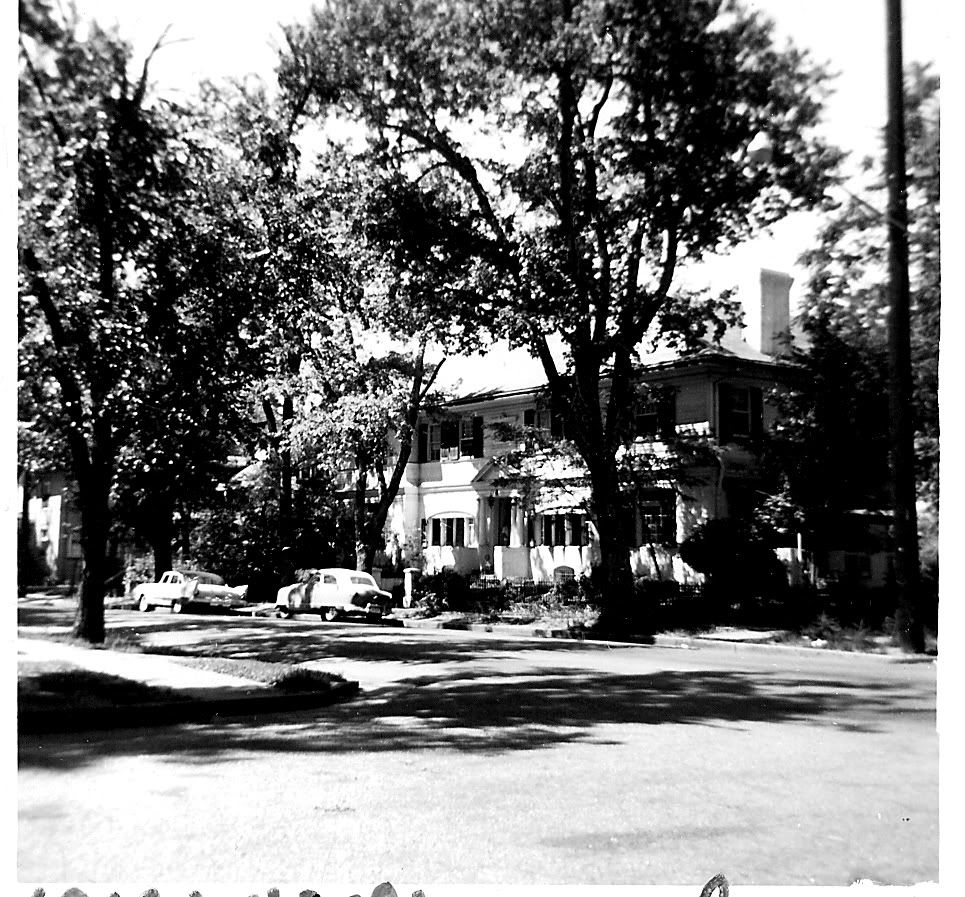
On arriving in Lincoln, we lived in a rented house at 1226 E Street. At first, Pop engaged in real estate with Mr. McGinley and Mr. Easley. He did not care for it and decided to return to the pharmacy business. He rented a store at 19th and O Streets. Over the following years, he was to buy, sell open and close many drug stores—always keeping 19th and O as the mother store. He worked very hard from early morning to closing. He was later able to hire a Mr. Pitcaitley and Mr. Koza. Brother Dan got a job assisting Ralph Sequin at the Knights of Columbus Hall. They lived there and cleaned and set up the place for events that were held there. At the time, Dan was able to take classes in Business Administration at the University of Nebraska. Meanwhile Pop wanted a home which he could own, so he bought a double house at 1720 M Street – only four blocks from the store.
I believe everyone except Bud worked in the store. Bud worked nights at the Nebraska Journal while attending Nebraska University. A few years later I worked at the drug store keeping the customer ledgers and sending out monthly statements. I also prepared the deposit, put the money in a plain paper bag and walked the six blocks to the bank. People en-route must have known the purpose of those regular trips, but never was I robbed nor did we ever think of such a thing.
Very few people went to the doctor in those days as they could not afford it. Dr. McCarthy was an excellent doctor/surgeon. When a patient had to have a prescription filled, he sent them to Pop. Likewise, when customers came to Pop and he knew they needed a doctor’s advice, Pop sent them to Dr. McCarthy. I was at 15th and A at the time of Pop’s death. A lady called and said none of us would know her by name, but she wanted us to know she could never have raised her family without Pop’s help and advice.
I remember asking my mother (Nellie) how come everyone came to Pop all of the time (not family, but others) for aid and financial help when he had a family of 12 children to provide for. Her answer was that it was all right – they didn’t mind because the more they gave to others, it seemed the more they got.
Pop was running drug stores during the depression and I worked at the 19th and O store, keeping ledgers. He would not let me send out statements until he looked through them. That was so he could hold many of them with a ‘No, don’t send that poor fellow a statement. He’s been out of work and sick for a long time.’ He had to pay his bills to suppliers to keep a good credit rating, but for some people, he was the last to be paid.
When Pop had the help in the store he took Mom and the youngest 4 children in his Model T for a week in Colorado Springs camp park, Prospect Lake. We went about 100 miles or less per day. Mom and Pop slept on fold-up cots, kids on the ground. Cooking was on a gas stove. Pop would always save the bacon grease, but Mom would take it to the privy and rid us of it. Pop took us on a donkey ride up one of the mountains. They would nibble grass on the outside of the trail BUT Pop assured us they were VERY sure-footed. In later years, Pop would take us to Seward or Crete where they rented cabins that were furnished and had a nearby store where we would get supplies.
At home, Pop would take the young ones to every church bazaar, loaded with nickels to buy chances on everything. Meantime, the older family members went different paths.
Jerry, the oldest, enlisted for WWI and served in the Evacuation Hospital #7 during the war and for a while longer after the armistice. He attended Medical School in Omaha upon returning. He contracted yellow jaundice and was unable to continue his medical training. Jerry decided to major in chemistry in that he was especially proficient in that. Before he was to graduate, he suffered a heart attack in December and died.
Pop continued in the pharmacy business. He was always interested in politics, William Jennings Bryan philosophy, etc. Around 1937, he was appointed Postmaster of Lincoln. He discontinued his activity in the drug store and Helen bought half interest in the business and administered the business. Years later, the store was sold to Joe and Herman Schuchman who had worked for Pop for many years.
Pop always loved farms, so he always had one here and there, selling this one, buying that one. He was about 75 when he decided to settle all his loans and quit investing. He had lots of courage and smarts to do so well with so many mouths to feed (12!) wouldn’t you say so?
Before I write “finis” I wanted to mention that Pop said the one thing he regretted was that he did not have enough time to spend with his children. Given all of the responsibilities he shouldered, one can certainly understand!
From the “Who’s Who in Lancaster County”….FENTON, ROBERT EMMET: Postmaster; b. Dawson, Neb. Dec. 5, 1870, son of Jeremiah Fenton-Catherine Calnon; ed Dawson HS 1887; married Nellie A. Riley June 19, 1895 Dawson; sons: Jeremiah H. (Dec. 1933), Daniel A., Robert E., Francis C., David T., Richard L., Lawrence B.; daughters: Sister Mary Madaleva, Catherine E., Helen C. (Mrs. Joe Calcaterra), Florence B (Mrs. C. Dompierre), Loretta; 1887-93 studied pharmacy under Dr. J.T. Kinsler in drug store, Omaha; 1893-1905 in drug business, Dawson; 1905-18 farmer, Washing Co. Kas; 1918- in drug business 19th & O, Lincoln; 1936- P M, Lincoln; past owner drug stores at 17th & South, 33rd & A, 12th and N, Lincoln; owner & operator farms, Sedgwick & Kit Carson Counties in Colorado, Washington County, Kansas; past President Farmers Union & Farmers Union Elevator, Washington County, Kansas; MWA; C of C; Kiwanis; mbr advisory bd., SA; KC; St. Mary’s Catholic Church; past hobby, politics; off P. O; residence, 1525 A. Street, Lincoln, Nebraska
Memories of her mother, Nellie Fenton from Aunt Florence:
Mom had always had a full head of heavy dark brown hair which must have been a chore to shampoo and style. When bobbed hair came into style she welcomed it and perhaps at the urging of the older girls, she had her hair cut. When I saw it, I was furious as she did not seem to be the Mom I knew. She still had some of those dark hairs all her life. Mom was so proud of her family and took excellent care of all of us. White long stockings were worn by all the young school girls, so Mom washed them daily at night so we would never appear in soiled ones.
Mom’s side of the family, Mary Riley, also lived in Connecticut. It was there she met and married Dan Riley and they moved to Dawson, Nebraska. They had twin girls, one died in infancy and the other was Anna Marie, who died right after Mom was born. Their father died when Mom was just a couple of years old, at which time he left Mom a couple of thousand dollars. Mom was happy living in Dawson with her mother, but when she was probably about 8-10 years old, her widowed mother married Goode. Mom went to live with her Dad’s brother (David) and Pop’s sister, Mary Ann Fenton Riley. She loved them and helped Aunt Mary Ann with housework and their babies (this was Father John Kean’s family). A bit later our Dad was in Omaha, where he apprenticed to learn pharmacy and he lived in the back room of the drug store. Later, when he learned as much about the pharmacy business he needed, he returned to Dawson. Mom and he had become fond of each other and planned to marry. Mom invested her money by building a drug store downstairs with an apartment upstairs. This completed and the first Fenton Drug Company opened.
On a visit from her mother, Mom told her that she just had not been feeling well early in the day. Guess what!! She was pregnant. She must not have minded too much as she repeated that performance 11 more times (plus one pregnancy outside the womb for which she went to Omaha as there was no local doctor to take care of it). They lived above the Fenton Drug Store until 1906, during which time they had six children. The apartment was getting too small; the profits from a small town drug store were inadequate. Pop and his father, Jerry, drove a wagon to Haddam, Kansas. They took ownership of farmland there, slept in a tent, planted a crop (probably corn or wheat), and built a house. They returned to Dawson and brought the family back to the house in Haddam. They remained there until the spring of about 1917. Mary and Katherine were at boarding school with the Sisters (Order of Sr. Aquinas, our cousin) and older children were requiring higher education not available nearby. Mom and Pop decided to move to Lincoln (where Uncle Will was warden at the state penitentiary) where he bought the store at 19th and O streets. From the mother store, there were many others in Lincoln over the years. I once told Mom I didn’t imagine she was too happy when #9 showed up. She assured me that #12 was as warmly welcomed as #1.
Mom was a soft, gentle lady. I once asked her how come she never screamed and hollered at us as other mothers did. She said she decided she had to control herself first, or go crazy. Since higher education was not available to her at a young age, when the rest of us were in school, she read books she ordered with her money.
Children of Robert Emmett Fenton and Nellie Riley are:
1. Jeremiah H. Fenton, born April 7, 1896, Dawson, Nebraska, died December 14, 1930 in Lincoln, Nebraska
2. Daniel Aleysius Fenton, born June 21, 1897, died February 16, 1952
3. Mary Angela Fenton, born Feb. 9, 1899, Haddam, Kansas; died Feb. 3, 1976, St. Mary’s Convent, Concordia, Kansas
4. Katherine Elizabeth Fenton, born March 29, 1901, Dawson, NE, died November 14, 1992, Lincoln, NE, married Richard J. Collins, d. 1970, California
5. Helen Clare Fenton, born November 21, 1903, Dawson, NE, died March 25, 1985, Lincoln, Nebraska, married Joseph Calcaterra, d.
6. Robert Emmett Fenton, Jr. (Bud), born August 27, 1905, Dawson, NE, died January, 1997, married Eleanor Vestecka, d.
7. Francis Fenton, born October 29, 1906, Haddam, KS, died July 18, 1940, married Nini Beilharz
8. David Thomas Fenton, born August 22, 1908, Haddam, KS, died October 3, 1992, married Helen Ashton
9. Florence Fenton, born October 19, 1910, Haddam, KS, married Clement Dompierre, born January 17, 1915 in Neguanne, MI, d. 1998
10. Loretta Fenton, unmarried, born December 19, 1912, Haddam, KS, died March 5, 1997, buried, Lincoln, NE
11. Richard Leo Fenton, born September 29, 1914, Haddam, KS, died January 21, 1977, Denver, CO, buried Mt. Olivet Cemetery, Denver, CO
12. Lawrence Bernard Fenton, born May 29, 1917, Haddam, KS, married Dolores Collins, born June 22, 1921, died January 3, 2000.
Additional information about the children of Robert Emmett Fenton:
(As told by Aunt Florence Fenton)
1. Jeremiah H. Fenton (Jerry). Jerry was not with the family when others moved from Haddam, Kansas to Lincoln, Nebraska. He was serving with Evacuation Hospital #7 in France, having arrived there on May 23, 1918. War ended on Nov. 11, 1918. He arrived back in the U.S. on April 29, 1919 and was discharged from Camp Dodge on May 15, 1919. When Jerry returned, he worked at the Fenton Drug Store at 19th and O. He wanted to pursue a career as a medical doctor, so took pre-med courses in Lincoln and then entered the Nebraska University Medical School in Omaha. During summer months, he worked at a mental hospital in Illinois. A couple of years (I don’t recall exact year) into his studies at Omaha, he contracted Yellow Jaundice and had to discontinue classes. He missed so much while he recovered that he didn’t have the heart to go back. He decided to return to Nebraska University in Lincoln, majoring in chemistry, at which he was especially good. He would have graduated in January, 1931, but died in December, 1930. The obituary for Jeremiah (Jerry) was as follows:
HEART ATTACK CAUSE OF DEATH OF FENTON: Returned to the Store After Taking a Clerk to His Home – Served in the World War. Death of Jeremiah H. Fenton, thirty-four who was found at the Fenton Drug Store at 19th and O at 2:30 A.M., Sunday was due to heart failure, according to Dr. T.F. McCarthy. He was the son of Robert E. Fenton, 1525 A Street. Warden Fenton of the state penitentiary, uncle of the dead man said that his nephew had eaten heavily and had exercised strenuously Saturday evening and that he had never been troubled with his heart. Fenton had been dead for some time when police arrived, according to Dr. George E. Lewis, city physician. Robert Fenton, the man’s father, left the store at 10:30 P.M. Saturday and Jeremiah left the store at 12:30 A.M. Sunday to take Joe Koza, drug clerk home, according to the warden. He returned to the store seemingly to obtain some medicine, although none had been removed from the shelves, Warden Fenton said. He had apparently collapsed within, as the keys were beside him and the doors were locked, it was said. The body was discovered by Mr. and Mrs. Clay Dollarhide, 234 S. 25th and by Mr. and Mrs. Richard Wolf. They noticed that the motor of a nearby car, which was unoccupied, was running. The four saw Fenton lying inside the store, face downward. He was clad in a hat and coat. The family and police were notified. Officers gained entrance by making a transom.
Mr. Fenton entered the university in 1926, taking a course in chemistry and was to have graduated in January. He had formerly studied medicine in the University of Nebraska medical college at Omaha for about two and a half years, taking two years of paramedic work at the university. Sickness had prevented graduation at that time. He was a member of Alpha Kappa Kappa, professional medical fraternity.
He enlisted in the army June 22, 1917 and was sent to Ft. Logan, Colorado and was transferred from there to Ft. Riley, Kansas. He was a private, first class in Evacuation Hospital No. 7 and served in the three main offenses, lacking a week of being in the army two years. He was discharged at Camp Dodge May 15, 1919. The hospitals which he saw service were Chateau Montanglaust, St. Juvin and Prim. He was a member of the American Legion.
Mr. Fenton entered the army upon graduation from high school at Haddam, Kansas and came to Lincoln after the war. Surviving are his parents, Mr. and Mrs. Robert E. Fenton and six brothers, Daniel A., David T., Robert E., Francis C., Richard L and Lawrence L., all of Lincoln; five sisters, Mrs. Joseph Calcaterra, Lincoln; Sister Mary Madeleva, Damar, Kansas, and Misses Katherine, Florence and Loretta Fenton, all of Lincoln Funeral services will be held at St. Mary’s Cathedral at 9:30 A.M., Tuesday, Mgr. P.O. O’Loughlin officiating. Burial will be in Calvary.
2. Daniel Alyeysius Fenton, born June 21, 1897, died Feb. 16, 1952… Dan had finished high school in Kansas so was looking for work where he could also have hours to attend the university working for a degree in Business Administration. He was able to get a job at the Knights of Columbus. They had a very large hall (somewhere near 12th and P Streets). There was a large hall with stage for plays, etc. Could also serve dinners. Had living accommodations and as I remember it Ralph Seguin and Dan lived on site there seeing that everything was in order for whatever occasions were taking place. Dan took classes for a degree at Nebraska University. Upon graduation Dan went to work as a detail man for Horlic’s Malted Milk. He traveled visiting doctors to give them samples and convince them his product would be helpful to patients. I know not just where or how he met Wanda Jamrog. Think she lived in Berwyn (outside Chicago) with sister Nell and she worked at a fine store selling silver crystal china, etc. They married in Ashton in about 1928. Katherine and Florence were bridesmaids as well as others. Big reception on the family lawn. Wanda traveled on the road with Dan. When in Lincoln they stayed with Helen and Joe at 1616 Sioux St. Since Wanda traveled with Dan she decided she might as well keep busy. She had some hair set lotion she liked analyzed. Pop mixed it up and bottled it for her. She visited beauty shops, took orders sent to the drug store and Pop mailed them out. When Wanda became pregnant with Jerry, they rented a house (somewhere near 27 and Garfield) and there she awaited his arrival which took its time. They lived at that address for some time.
3. Mary Angela Fenton, born Feb. 9, 1899, Haddam, Kansas, died February 3, 1976, St. Mary’s Convent, Concordia, Kansas. Known as “Sister Madeleva”…Mary had graduated from high school in Concordia, Kansas. If I remember correctly, she was just finishing a year of teaching in Kansas when we moved to Lincoln. She continued by teaching in Denton and boarding there during the week. She then entered the Business College of Lincoln to learn secretarial skills. I cannot recall for whom she worked. I only remember she loved chocolate ice cream. She came home for lunch each day; had me bike to the drug store to get her a half pint of ice cream. In the fall of 1925, she left home to enter the noviate of the Sisters of St. Joseph at Concordia, Kansas. That is where she and Katherine went to boarding school and where Sister Aquinas Fenton (William Fenton Branch) taught. On March 19, 1927, at the age of 28, Mary received the habit and the name of Sister Madeleva. She made her final profession on August 15, 1932. Sister Madeleva was a perfectionist about her work, slow and precise. She spent her working years at the girls’ school in Salina. She died from breast cancer at the retirement facility in Concordia. In 1975, Sister Madeleva’s health became a serious problem primarily due to breast cancer. She suffered through a mastectomy which left her with a swollen arm that eventually became so heavy that someone else had to carry it for her when she walked. Sister Madeleva died at St. Mary’s Convent on February 3, 1976 at the age of 76. The sisters were all around her bed praying when she died. She had expressed her desire to have them there but she didn’t want them to pray out loud.
4. Kathryn Elizabeth Fenton [with sisters], born March 29,1901, Dawson, Nebraska, died November 14, 1992, Lincoln Nebraska; married Richard J. Collins. Her name was originally spelled “Katherine”, but she preferred the spelling “Kathryn” as she thought it looked better and began using this spelling. When Kathryn came to Lincoln she taught school for a year or two at a small place about 8 miles north of Lincoln. She boarded with the Burkes during the week, then came home every weekend. She decided to go to business college to learn secretary skills. She then got a job in the President’s office of Gold & Co. Department Store. She met Millar Zook who worked in Men’s Wear. He was a good dancer and Kathryn loved to go dancing. He had no car so they took a street car out to Antelope Park several nights a week. Millard transferred to a better job in men’s department of a store in St. Joseph, Missouri. They would visit each other on weekends. Kathryn learned some lady there was wooing him or vice versa and she was broken-hearted. Florence worked at Grainger Bros., which was a block from the Burlington Depot where Kathryn now worked. They decided to buy a car together with Pop co-signing for the loan. It was a neat Essex coupled with a rumble seat and red wire wheels. This was used for transportation taking Pop to his farms and for summer vacation. One year, Kathryn, Florence and Eleanor Vsetecka drove up to Canada returning through New York and Washington D.C. Kathryn loved Washington and decided she and Florence should take Civil Service exams and perhaps get a job there. This they did and in February of 1935 (I think) were offered stenographic positions in the Post Office Department. We lived in a “ladies only” hotel, then a boarding house, then an apartment. Very interesting city with historical sights, etc. On vacations to Lincoln, Kathryn dated Tom Sweeney (Florence, his friend, Bill Burke). Kathryn could not get serious about anyone. In 1938 Kathryn transferred to a job with the Railway Mail Service but left her furniture in the apartment with Gert Cavanaugh, who was living there (Florence and Don would take over the apartment and furniture after their marriage of December, 1928). Kathryn transferred to the San Francisco office of Railway Mail. Dick Collins was an executive in the office there and became very interested in Katherine. They married about 1948. They lived in Palo Alto when Dick returned and developed lung cancer. He died there. Kathryn [center w/Dave and Helen] remained in an apartment in Burlingame until moving to Sun City and lived there until she developed dementia (Alzheimer’s Disease) and spent the remaining five years at Madonna Nursing Home in Lincoln, Nebraska.
5. Helen Claire Fenton, born Nov. 21, 1903, Dawson, Nebraska, died March 25, 1985, Lincoln, Nebraska. Married Joseph Calcaterra, d. Aug. 5, 1943. When we came to Lincoln from Kansas, Helen and Robert were in the same grade as Helen and missed a couple of years or so due to suffering from asthma. They graduated from Cathedral High School in 1922. During high school, Helen worked weekends and summers at the Woolworth store and at The Beatrice Creamery Company. Upon graduation, she enrolled at the business college to learn stenographic bookkeeping and office skills. I do not recall, but I think her first job was with the Farmers Mutual Insurance Company. There, she progressed to different positions. She met Joseph Calcaterra who worked at the Burlington Railroad loading, unloading and sorting mail. They were very much in love. She had no ambitions for rising to high positions. She wanted to marry Joe, keep house and raise a family. Joe was industrious. He owned a car, he bought a lot at 1616 Sioux Street and proceeded to have a lovely small house built (helping with much of the work himself). Helen and Joe married in about 1926-27. They continued with their work but Helen’s joy was her home. Many gatherings were held there. In the summer of 1943 Joe had a setback with his heart damaged by rheumatic fever in his youth. He died at home. Helen was heartbroken. She sold the Sioux St. house and moved to 1525 A Street with her mother and dad. When Don Dompierre entered service in the Navy on Christmas day of 1943, Florence went to Lincoln to live at 15th and A. Helen loved having baby Brian to lavish her affection on. At work, Helen now put more interest in the insurance business. She was an assistant to the Head of Claims Department and when Mr. Leffers retired she was made head of the department. Later, she became Vice President and Treasurer of the company and Dwight Perkins was President. Helen assisted in investing the mutual funds of the company; attending conventions where she often gave speeches; and was respected throughout the country by insurance executives. She could have been a wealthy woman but whenever anyone was in need she would come to their aid with time and money. Helen retired from the company at age 65. Shortly thereafter, she asked Loretta if she would take early retirement and move into a condominium apartment which she would buy in Sun City, Arizona. Loretta agreed to this and they moved to Sun City in the spring of 1976. Loretta realized that Helen was suffering from dementia (Alzheimer’s Disease). It was necessary to take her to Madonna Center in Lincoln which is where she said she always wanted to be if need occurred. Loretta and Katherine accompanied her and she entered willingly. She remained there until her death on March 25, 1985, and is buried beside her husband, Joe at Calvary Cemetery.
6. Robert Emmett Fenton, Jr. (known as “Bud”), born August 27, 1904, Dawson, Nebraska, died January 28, 1977. Married Eleanor Mary Vsetecka. After graduating from Cathedral High School in 1922, Bud worked at the drug store and also at the state journal while attending Nebraska University. He then obtained a job at Montgomery Ward’s in Chicago. Mom and Florence visited Chicago on a Labor Day excursion to see Robert. Eleanor Vsetecka was also working in Chicago so we also visited with her. Eleanor returned to Lincoln shortly as she was not making enough to get ahead financially. Bud later came back to Lincoln because he had thyroid trouble. He worked at the drug store. Eleanor and Florence were pals so their paths crossed. Bud dated Eleanor once a week or so. He told her he could not afford to go out often but he did not want her to go with anyone else. Eleanor worked at Cudahy Packing Company and Pegler’s and she loved socializing and having lunch with a different friend every day. In the meantime, Bud longed to go to the farm. Eleanor and Bud married at St. Mary’s Cathedral on October 1, 1936. They lived in a rented house in Lincoln until Bud was able to rent one of his dad’s farms in Washington, Kansas where they spent their remaining days. Since Bud’s death, son, Jim bought both of the farms.
7. Francis C. Fenton, born October 29, 1906, Haddam, Kansas; died July 18, 1940, Lincoln, Nebraska. He married Nina Beilharz. After moving to Lincoln, Fran attended Cathedral School from which he graduated. He worked at the drug store after school and during the summers. He often accompanied Florence, Loretta and their friends to Friday night dances at Sacred Heart school hall. After high school graduation he attended the School of Pharmacy and the Nebraska University. He found however, that he could not handle some of the subjects like chemistry, so was unable to get his degree. He continued to work at the drug store(s) and was dating Nina Beilharz (a friend of Loretta’s) on a steady basis. They were married at St. Mary’s Cathedral and rented a small house in southwest Lincoln. His dad realized that Fran’s tendency towards alcohol was causing trouble in his work and his marriage so took him to Baily’s Sanitarium for treatments. Nina moved out to California to live with her parents (who had moved there recently). Fran joined them on release from Bailey’s. They rented a house and Fran got a job as manager of a liquor store and had no further trouble with drinking. In about September of 1939, Fran became ill with what was diagnosed as Hodgkins Disease for which there was no cure at the time. He entered White Memorial Hospital. Pop Fenton paid all of the hospital bills, house rental and all expenses for Nina and their children, Dick and Joan. When Fran expressed a desire to go back to Lincoln, Pop hired a nurse to accompany him on the train and he, Nina and the children stayed at 1525 A Street. The sun room on the first floor was made into a room for Francis. He died there on July 18, 1940. Nina and the children returned to California. Nina later married a man by the name of Barton and they had a girl named Kathy. Nina died in 1999, her husband pre-deceased her. Dick, Joan and Kathy all live in the area of Fremont, California.
8. David Thomas Fenton, born Aug. 22, 1908, Haddam, Kansas; died October 3, 1992 at the Veterans Hospital, Lincoln, Nebraska. He married Helen Ashton, divorced and married Mary Holden in 1973. David attended Cathedral School but he did not really like school. He was more of an entrepreneur. In the summer he had firework stands and ran park refreshment stands. In the winter he made arrangements to sell Stovers or some fine brand of chocolates to businesses in quantities as gifts for their employees. He worked hard and long at these endeavors. When Dave was about a sophomore, he took off for Chicago and found a job there. His dad told him that he was going to finish high school if it took him until age 25. He finally did that. Dave married Helen Ashton and they had one son, David Jr. They were most incompatible and divorced when David Jr. was a baby. David tried to enlist in the Army for WWII but was turned down because of very bad varicose veins. However, when he was drafted a short time later, they accepted him as fit. At training camp they insisted he participate in all the marches, exercises, etc. His veins became so bad they had to operate and really botched them up so he was given a medical discharge with total disability. When Dave was 65, he married a long time friend, Mary Holden. Mary was a wonderful wife and they lived in her small house which Dave had completely renovated. David died at the Veterans Hospital in Lincoln after suffering several colon stoppages. Mary still lives in Lincoln and is in touch with the Fenton family. We have not heard from David, Jr. in years. He was last seen in Denver when he attended a family picnic and saw his father.
9. Florence Fenton [with sisters], born October 19, 1910 in Haddam, Kansas and died October 3, 2003 in Denver, Colorado. Married Clement Dompierre (who was also the 9th child in a family of 12 children). Florence’s biography, written by herself: I graduated from Cathedral High School in 1927, then attended Nebraska University for one year to take commercial subjects. I wanted to take pharmacy, but Pop did not believe in lady pharmacists. I worked at the drug store after school keeping customer ledgers and sending statements, making deposits, etc. After a year at Nebraska University I worked at Cudahy Packing then at Granger Bros. where I progressed from steno to secretary to Vice President/Treas., John Granger. The depression hit and personnel was cut drastically. After, Katherine and I were offered jobs in the Post Office Dept. while in Washington DC in February, 1935. Clem Dompierre worked in Philatelic Agency and they met and were married December, 1938 at St. Mary’s Cathedral in Lincoln, Nebraska. Strangely, each was the ninth child of twelve children. I worked and lived in Washington DC until 1940 when Don got a job at Rocky Flats where he advanced to Controller; both Florence and Don retired in 1975 and moved to Sun City. Both Ann Marie and Brian were born in Denver. …Note from Kathy Ahroon: In September, 2003 Aunt Florence fell at her resident at The Gardens at St. Elizabeth in Denver. Unfortunately, she broke her femur and had to have surgery. Following her hospitalization, she was transferred to Brighton Gardens Nursing Home in Lakewood. There, she developed pneumonia and passed away in the early hours of October 3, 2003. Relatives came from California, Ohio, New Mexico and Kansas came to pay their respects. The funeral service was held at the chapel at St. Elizabeth and was filled with her family and friends. Afterward, a reception followed and family members shared their memories of Aunt Florence. Aunt Florence was responsible for keeping our family tree alive and helping me to update the family tree by 2001 in time for the Fenton Family Reunion. Everyone remembered her as being exceptionally sharp in mind, always hospitable and keeping busy with family and friends. She was buried in Sun City, Arizona alongside her husband, Don.
10. Loretta Fenton – born December 19, 1912, Haddam, Kansas, died March 5, 1997, Sun City, AZ, buried in Lincoln, Nebraska. On the outset, let it be said that Loretta was the most generous person one could know. Not only was she giving of her time but also of what money she had, although she never had high paying jobs. She once remarked that she loved keeping house, cooking, taking care of children and here she was the one who never married. Might add that was her own choosing as Lloyd Murphy, a fine man, wanted to marry her for several years but she could not make up her mind and after a few years he gave up urging her. Loretta graduated from Cathedral High School in 1930; attended Nebraska University for a year or two, taking English, shorthand, typing and accounting. She worked at the drug store taking care of the books as well as serving customers. Few years later she went to Omaha where Katherine also worked with Railway Mail. Katherine later married Dick Collins of the same office. Loretta decided to move out there where she took the Civil Service exam, passing it and was given a job with the Civil Service Commission. She stayed there until she was urged to return to the Cathedral Rectory to work. After a while she went to work at Fitzsimmons Hospital for more money and benefits. A priest at St. Louis Englewood asked Loretta to take a job there, which she did. In 1975, Helen asked Loretta if she would retire early and come to live with her in Sun City, AZ where she would buy a condominium. So Helen and Loretta moved to Sun City. It was soon obvious to all that Helen was suffering from dementia (or Alzheimer’s) and after a year or so, Loretta and Katherine accompanied her to Madonna facility in Lincoln which is where she always said she wanted to go if need arose. She lived there for 8 years before dying on March 25, 1985. Loretta returned to Sun City and lived in the condominium but soon suffered from cancer of the breast which had to be removed. About seven years later, an independent cancer appeared in the other breast requiring surgery. The cancer eventually spread to her bones. She was adamant about staying at home rather than in a nursing home and left against a doctor’s orders three different times. When she finally had to go to Sun Grove she was told she had better stay there until the doctor released her as she was running out of places to go. Loretta died there on March 5, 1997. She is buried in Lincoln on the Fenton lot with Henry, Francis, Mom and Pop. Concluding: Loretta took care of everyone, run-down people near the Cathedral (she took in one pigeon lady who kept pigeons in her apartment to her place, scrubbed her up and gave her new clothes, although I suppose she looked as bad in a few days). She would have Maureen or Ann stay at her place for the weekend where she would indulge them with favorite foods, etc. She would have Dick’s family over for Sunday dinner and just happen to fry enough chicken so they could take home enough for another meal or two (made the BEST fried chicken). Lots of people hit her for loans, knowing she was a soft touch.
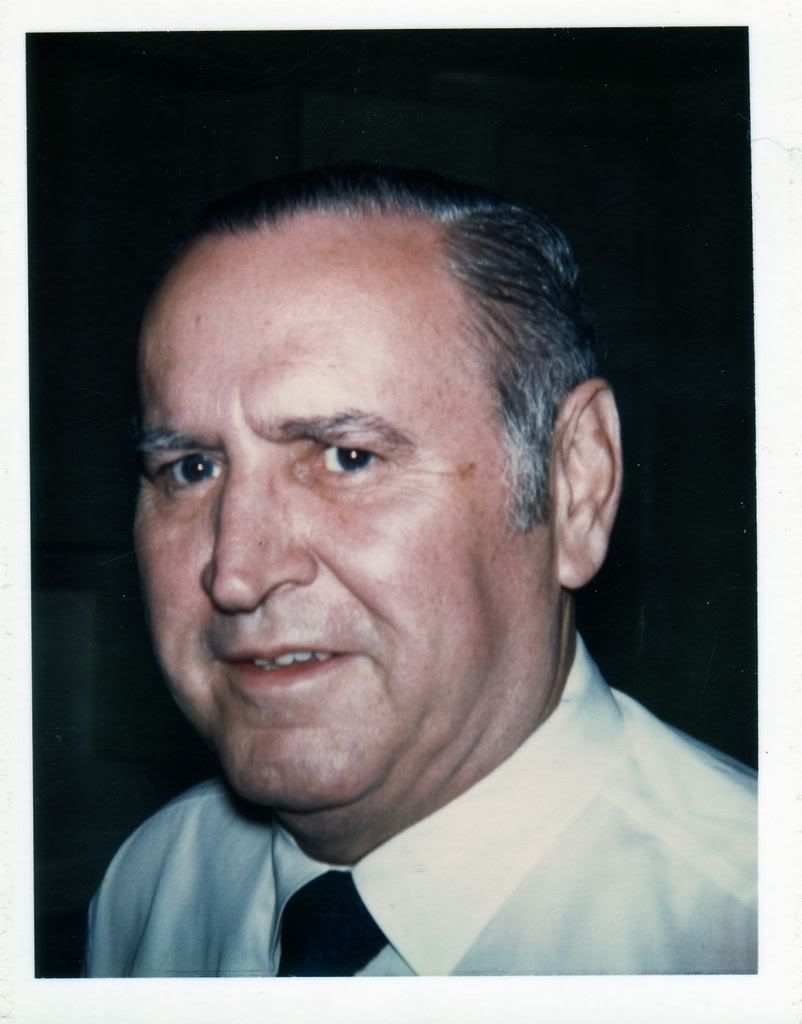
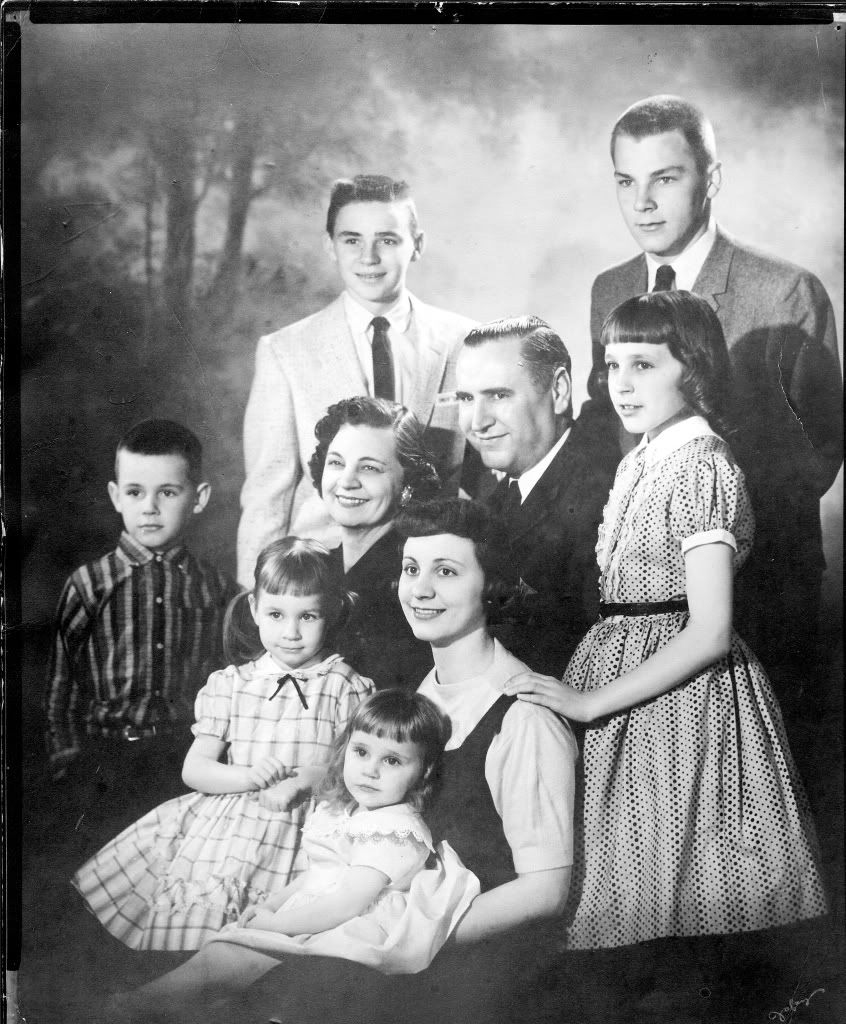
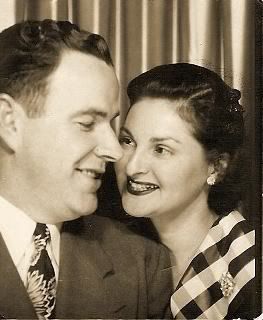
11. Richard Leo Fenton (known as “Dick”), Robert Emmet (3), Jeremiah (2), Timothy(1) born September 29, 1914 in Haddam, Kansas, died January 24, 1977 in Denver, Colorado. Married Rosa Catherine Laux July 16, 1936 in Nebraska. She (lower left) was born January 27, 1915 in Havelock, Nebraska and died October 28, 1998 in Denver, Colorado. Let this account of my brother, Dick [top left] be prefaced with two facts. First, he was a people-person. He loved to be with lots of people. Second, he was also a spender whether he could afford to be or not, it made no difference. He did not spend on himself, he just liked to buy for others, family, relatives and friends. Dick [with brother Dave] graduated from Cathedral High School. He was captain of the football team [holding football]. He worked at the Fenton Drug Store when time permitted. Rosa Laux was in the same high school and Dick was very interested in her. After graduation, Dick went to St. Benedict’s College in Atchison, Kansas; perhaps it was on a football scholarship…I don’t recall. He did not stay long; probably missed Rosa. He worked at the drug store and Rosa worked at the Nebraska University, which did not hire or keep married women. So, Dick and Rosa went to Dawson, Nebraska where they were married by a priest friend. They did this so Rosa could keep her job (which was needed). Maureen was born in December 1939. In September, 1940 Dick, Rosa and Maureen came to Denver and stayed with Florence and Don so Dick could search for employment. He went into Holy Ghost Church and prayed that he could find work. Coming out, he saw the HJ Heinz office nearby and stopped to inquire. He was hired but had to travel so Rosa went back to Lincoln to stay with folks for a while. Finally, they rented a home in Englewood, Colorado. Dick was a top notch salesman with many ideas for increased sales. Later, he got a job with Johnson & Johnson where he did extremely well. They lived in Denver, Texas and Minneapolis. Later, Dick got a job in Denver and became the Vice President of William Kostka & Associates Public Relations firm in 1959. He even had Bob Hope there for opening ceremonies! Later the same year, he opened his own offices and a year later merged with Robert Armstrong. [Dick and Rosa on their 25th Wedding Anniversary, July 1961] In 1968, he became director of leasing and public relations for the Colorado State Bank skyscraper, then being built. Poor health forced his retirement. Sometime in later years, Dick developed a stoppage in his carotid artery and had to have surgery during which he suffered a stroke. He was never well after that. He went to Mt. Airey Sanitarium for treatment and was to go home the next day when he suffered a heart attack and died on January 21, 1977. He is buried [as is his wife Rosa] in Mt. Olivet Cemetery in Denver. Dick was a 23-year resident of Denver, was a member of the Denver Press Club, past vice president of the Cosmopolitan Club and past president of Toastmasters Club. He was a member of the St. Vincent de Paul Catholic parish and also attended the Immaculate Conception Cathedral where the family were former members while living in the downtown area [1739 E. 13th ave.].
12. Lawrence Bernard Fenton, born May 29, 1917 in Haddam, Kansas. He married Dolores Collins October 18, 1952 in St. Mary’s Church, San Francisco, CA. She was born June 22, 1921 in San Francisco, California and died January 3, 2000 in Sun City, AZ. Larry graduated from Cathedral High School in 1935. He played football with the high school team, meanwhile working at the Fenton Drug Company when time permitted until mid-1940. Larry attended the St. Thomas Seminary in Denver from September, 1940 to June 1941. In October of 1942 he was drafted into the U.S. Army and assigned to the Armored Infantry. Just before their unit was to be shipped overseas, Larry was given an Honorable Discharge for medical reasons. Learned later that the unit to which he was assigned was wiped out in Europe. Larry worked as a Civil Service Postal Clerk in the Lincoln Post Office from 1944 to 1946. In July, 1947, he left Lincoln for San Francisco and joined Fireman’s Fund Insurance Company in July, 1947, retiring in August, 1982. There, he advanced to the head of underwriters for the Marine Division. At Old St. Mary’s Church social club in San Francisco, he met Dolores Collins. They were married on October 18, 1952.
13.
Generation Number Four
Richard Leo Fenton, Robert Emmet (3), Jeremiah (2), Timothy(1)
1. Maureen Anne Fenton, born December 26, 1939, Lincoln Nebraska
2. Joseph Francis Fenton, born June 12, 1941, Grand Junction, Colorado
3. Richard Leo Fenton, born December 3, 1942, Denver, Colorado, died May 2, 2010
4. Elizabeth Katherine Fenton, born November 11, 1947, Denver, Colorado
5. Lawrence Bernard Fenton, born June 12, 1951, Minneapolis, Minnesota
6. Mary Louise Fenton, born November 3, 1953, Denver, Colorado
7. Kathleen Ellen Fenton, born October 30, 1955, Denver, Colorado
Okay brothers and sisters….time to start writing your biographies for the next edition of My Irish Ancestry!
I hope you all enjoy reading through the history of our ancestors. They certainly paved the way through hardships and determination to make a better life for those yet to come…that would be US! God bless you all!...
Kathy Ahroon
The Fenton Family Tree
Direct Lineage Highlighted in Red
Click Underlined Words for Photos or Side-notes
Compiled by Kathy Fenton
A Brief History
Troubles began in Ireland in 1689, when a Protestant was restored to the English throne. After this, Catholic peasants were repressed and denied education, wealth, voting rights, etc. By 1840, Ireland was terribly crowded with a population of 16 million. (Consider that Ireland’s current population is just over 3.5 million). Ireland was the most overcrowded country in Europe.
The history of Ireland for centuries was principally concerned with the struggle for Irish civic and religious freedom and separation from Great Britain. Great cruelties were perpetrated on both sides from time to time, but the part of Irish History that concerns us most is the mid-1800’s. At that time all Irish citizens, Catholics included, were compelled to pay tithes for the maintenance of the Anglican Church of England. In 1838 a bill was passed in Parliament converting the tithes to a rent charge, which was just as unacceptable as tithing. At this time Irish Catholics were denied all legal rights—they could not hold office, serve on juries, vote, own property and were reduced to the lowest form of servitude. All that kept them from starving was the potato crop, since they were not allowed any meat or dairy products. They were known to “bleed the cows” at night and mix the blood with sorrel grass for survival.
Then in 1845, the potato blight struck and destroyed their main crop for the next three years. Overcrowded and underfed, the Catholic Irish fell prey to epidemics that killed more than a million people, and hundreds of thousands starved to death. Then they started to flee, especially to America. It has been estimated that by the end of 1848, through immigration and deaths resulting from famine, the population of Ireland was decreased by a half a million. The 1790 census showed just 44,000 Irish in the U.S. In the 1830’s, immigration jumped to 15,000 per year, and during the potato famine it went up to 100,000 per year. The Irish made up 45% of the total immigration to America during those years. By 1921, the population of Ireland had dropped to 4.5 million. Today, Irish immigration is down to 2,000 per year. There are now more people of Irish descent living in America than there are native Irish people living in Ireland.
The Potato Famine
Growing potatoes in Ireland became very popular because potatoes were handy to have around, especially during times of war. The edible underground tubers were likely to escape the notice of invading troops. The growing green tops could not be set afire as could fields of wheat or barley. Even if a potato field was trampled by soldiers, the tubers would be undamaged. Armies and outlaws were not likely to take the time to dig them up. After being dug up, the potatoes could be taken directly to the kitchen to be cooked and eaten without having to be ground at a mill first. They could be stored in a root cellar for months, to be eaten in leaner times. People with very little land could still grow lots of potatoes, which was not the case with grains. Potatoes thrived in Ireland’s very poor soil, and all that was needed to plant them was a spade. It is thought that the nickname “spud” came from “spade.”
The potato blight has been around as long as there have been potatoes, and there is still no cure for it. Beginning in the year 1845, Ireland’s entire potato crop failed three years in a row, causing devastating starvation and social upheaval. The potato crop failed in America at the same time it failed in Ireland. In Ireland, however, the potato was the sole food crop on which the majority of the people depended upon for nourishment. In America, corn, oats, wheat, barley and other crops were grown in sufficient amounts so that Americans had other crops to feed them.
Migration
In 1870, half of America’s two million Irish immigrants lived in the three states of New York, Massachusetts and Pennsylvania. By the turn of the century, a quarter of the population of New York City and Boston were of Irish extraction, and the Irish immigrants comprised 10 percent of the population of at least 20 other major northern cities. The Irish hold the distinction of being the very first white ethnic group to suffer prolonged discrimination from other Americans. Today, they are one of the most evenly distributed ethnic groups in terms of economic and social position.
Generation Number One:Timothy Fenton and Johanna O’Brien
It has been recorded that Timothy Fenton was born about 1807 in Sunville Upper(now, Ardpatrick Ireland). However, since that church no longer exists, the records were passed on to the neighboring Roman Catholic parish of Kilfinane. The earliest records we were able to obtain went back to 1833. No records exist prior to this date.
Note: Though records show that Timothy’s family lived in Kilmallock, there were no records found in Kilmallock by the County Limerick Archives for the Fentons. However, once the search was expanded to outer regions, records were found in the Kilfinane Parish, which had taken over the church records from the Ardpatrick Parish. During the Potato Famine, areas in Ireland were divided into unions or separate governing areas. The Kilmallock Union comprised the areas of Kilmallock, Ardpatrick, Kilfinane, Bruff, etc., which is why I believe that when they said at that time they were from Kilmallock, they were referring to the union area, not specifically to the town of Kilmallock. Later in my genealogy research, I stumbled upon an article in The Lincoln Star newspaper, Lincoln Nebraska. The article was printed March 12, 1926, entitled “Shamrock Is Sent To Warden Fenton”. This is my great-uncle, William T. Fenton, who was Warden of the Nebraska State Penitentiary. It talks about a shamrock being sent to him from his father’s old home in Ireland. The plant was forwarded in a letter by Nellie O’Brien, a cousin of the warden. It stated “she is now one of the owners of the land on which the ruins of the Fenton ancestral home appear. This plant was plucked from the ruins themselves. Jerry Fenton, father of the warden and well-known democrat in Nebraska, came from his home in Upper Sunville, County Limerick, years ago, but he and his son after him have kept up correspondence with the relatives in the old country.”
Additionally, I have located a Fenton family that lives in the Kilfinane area who believe (as I do) to be related to our Fentons. They live at the Molanna Farmhouse in Ballydonohue. They have been a great source of information and inspiration to me regarding the area history and the Fenton families that existed there during the potato famine. In fact, they have in their possession, the original land records of the area for that period.
Timothy Fenton was born about 1807. He married Johanna O’Brien, who was also born in the same region about the same date, 1807. As was the custom at that time, Timothy was a tenant farmer. To this union were born six sons and one daughter. The children in order of their birth are, Jeremiah, Thomas, Hanora, John, Denis, William and Patrick. The Kilfinane parish records only commence from 1832 forward, so there is no baptismal record for Jeremiah. The baptismal records of the other six children are recorded as follows:
Date Name Godparents
08/13/1833 Thomas Matt O’Brien & Hanora Fenton
04/18/1836 Hanora John Quinlan and Ellen Lyons
12/16/1838 John William Lyons & Mary O’Brien
05/27/1841 Denis John Quinlan & Mary Quinlan
05/26/1844 William William Quinlan & Mary Fitzgerald
03/07/1847 Patrick Martin O’Brien & Mary Flynn
The spellings above are how the names were recorded in the parish records and also the common Irish spellings of their names. Thomas and John’s surnames are recorded as “Finaghty.” It is assumed that the youngest son, Patrick, died in infancy prior to the time of Johanna’s emigration since he is not mentioned in any other records and we only recently learned of him through the baptismal records. It was customary at that time to baptize infants within a few days after their birth. So, the baptismal records should give us an idea of when they were born.
Timothy was killed in an uprising against the Crown during the potato famine when Jeremiah was only 15 years of age. The verbal family history passed down was that Timothy had attacked an Englishman and that he became a wanted man with a price put on his head. Whatever followed remains a mystery. However, what is known fact is recorded by William Fenton in the Dawson Reporter following the death of his brother, Jeremiah (known as Jerry)….”When but a boy of 15 years of age, his father (Timothy) died and he being the eldest of a family of five brothers and a sister, upon him devolved the duty of assisting his widowed mother to care for the younger members of the family. The cruel and inhumane conditions that confronted the sorely afflicted widowed mother were disheartening in the extreme; with the father’s demise also expired the lease of the ancestral homestead, and as the heartless landlord was more interested in the propagation of cattle for the English markets than robust Irish boys who were liable to grow up rebellious to foreign rule, he not only refused to continue the widow in her holding, but employed a force of bailiffs to haul away the crop intended for the sustenance of his children by a provident father….”
An address (house and garden) for Johanna O’Brien Fenton is recorded in the Griffith’s Valuation Survey of 1852 in Sunville Upper (now known as Ardpatrick). It is assumed that since Johanna’s name is recorded on the Survey instead of Timothy’s, that Johanna was widowed by this time. Since we know that Patrick Fenton, the youngest child of Timothy and Johanna was baptized in 1847, we presume that Timothy’s death occurred between that date, 1847 and the date Johanna is listed as “head of household” in 1852.
The townland of Sunville Upper consisted in total of 553 acres. The landlords were Frederick Charles Trench, Esq. and Miss E.O. Gascoigne. Sunville Upper includes part of Ardpatrick village and is in the civil parish of Particles. The civil parish was the unit if division which was utilized for land surveys, etc. It was an older administrative subdivision which predates the Roman Catholic Parish. In Samuel Lewis’ “Topographical Dictionary of Ireland” (1837), it describes Particles: “The parish in the barony of Costlea, county of Limerick, and province of Munster, 5 miles (S.) from Kilmallock, on the road to Kildorrey. This place derives its name from particles or parts of several religious foundations of which it was formed; these are the townlands of Down Gadmond, Down Innish, Chapel Martel, and Ineychal, which, prior to the Reformation, belonged respectively to the abbeys of Buttevant, Kilmallock, Manister-Nenagh, and Adare. At Sunville is a very extensive flour mill, with machinery of the most improved description, producing 3000 barrels of flour annually, and affording employment to a part of the inhabitants, of whom the rest are wholly employed in agricultural pursuits…”
There is no record of the hardships and struggles that must have been endured nor how money was obtained to secure passage for her and her children to America. However, it is known that they arrived in May, 1854 and followed other Irish emigrants to settle at Norwich, Connecticut. Johanna O’Brien Fenton is our immigrant ancestor from whom we all descended. Note: Ann (Fenton) Pongratz, a descendant of William’s branch, came across some letters of her Aunt Madeline Thomas to her Aunt Sister Aquinas. In the letter she wrote that “Pop” (her father, William) told her that Honora, an expert weaver, came over earlier with some other emigrants, Mike Riley, among them who looked after her. She saved her money and sent it back to her mother, which enabled Johanna to bring the rest of the family to America. This fits with the recent information we found, below.
Note: In March, 2006, I (Kathy Ahroon) received passenger records from Ann Pongratz (a descendant of emigrant ancestor William). They were obtained through Ancestry.com. It shows that on May 19, 1854 a ship named Progress arrived from Liverpool, England to New York had the following passengers originating from Ireland:
Johanna Fenton Age 40 Estimated Birth: 1814
Jerry Fenton Age 20 1834
Thomas Fenton Age 18 1836
John Fenton Age 12 1842
Dennis Fenton Age 10 1844
William Fenton Age 9 1845
Winifred Fenton Age 5 1849
Winifred Fenton is a mystery to us. Who is he/she? The child is listed as a male on the ship manifest. The name of a Winifred O’Brien shows up in the baptismal records we received. Perhaps, he/she was an O’Brien and not a Fenton? We simply do not know. The ages of all do not seem to be correct, however, the order of age is accurate. Noting that Honora was not on this passage fits in with the letter that Madeline Thomas had sent to her Aunt Sister Aquinas…that Honora had come over earlier. According to the date of the arrival of the ship, it would have made Honora around 19 years old at the time the rest of her family arrived.
Johanna died June 10, 1881 at the age of 74 years. According to a small note in the newspaper, “she had been quite feeble some time before” and…”Her remains were followed to their last resting place by a large number of friends.” She is buried at the Dawson Cemetery at St. Mary’s Church in Dawson.
Generation Number Two:
When you think of the family tree in America, think of widow Johanna as the trunk and her six children as the main branches: Jeremiah, Thomas, Hanora (later spelled Honora), John, Denis (later spelled Dennis) and William.
When the family reached America there were no child labor laws to protect them, so that all of the children old enough to work found employment in the local cotton factories.
Word of better pay lured Jeremiah and his brother Thomas to the gas works at Charlottsville, Virginia. They saved diligently to buy a home and acreage for their mother and family. By the time the Civil War in the U.S. began, Jeremiah and Thomas had saved several thousand dollars toward their goal. When Virginia joined the Confederate Forces all U.S. money was changed to scrip and went the way of the Confederacy. Thomas returned to Connecticut as poor as when he arrived in America, but with a greater determination than ever to get that home for his mother.
Jeremiah (also known as Jerry or Hon. Jerry) remained in Virginia to marry Catherine Calnon on December 28, 1861. Note: I was able to locate Jeremiah’s Marriage Certificate in Albermarle County, Charlottesville, Virginia. Jeremiah’s surname was incorrectly listed as “Finton” instead of “Fenton.” Catherine’s maiden name is listed as “Callinon” instead of Calnon. Her parents were listed as Jeremiah and Mary Callinon. It was not unusual for the Irish to Anglicize their surnames after arriving to America, so Callinon was probably the correct surname for Catherine. However, Jeremiah is never known to have used the name “Finton”, so I believe that this was just a clerical error. In 1863, Mary Ann, the first of their eleven children was born at Charlottesville, Virginia. Shortly after her birth, Virginia authorities were pressuring Jeremiah to join the Confederate forces. Since he was not in sympathy with the Confederate cause, he fled the south and escaped back to Connecticut. His wife disposed of their property for five thousand Confederate dollars which she had converted to one hundred U.S. Dollars and headed north with her infant daughter. When she was met by Jeremiah in New York, Catherine had twenty dollars left.
Details of John’s life at this time are unknown but he was drafted into the Confederate Army. He was strongly opposed to the Confederate ideals, deserted, traveled by night and hid by day until he reached the Union forces with whom he served until the war’s end.
By the spring of 1867 Thomas had saved $3,000 and his friend Bryan Riley had saved $2,000 toward the purchase of land. They, with Thomas’ sister Honora (known as Nora), an expert weaver, their brother Dennis, and Bryan’s two sons, set out for Richardson County, Nebraska. St. Joseph, Missouri, was at this period the nearest point by rail, and after passage on the river steamboat to Aspinwall and a drive across the boundless prairie, at last they came upon the humble but hospitable log cabin home of Michael Riley, located on the bank of the Nemaha, not far from the site of the village of Dawson. (Note: Bryan Riley is the grandfather of Nellie A. (Riley) Fenton and is therefore, the 2nd (maternal) great-grandfather to the children of Richard L. Fenton, born Sept. 29, 1914).
After selecting a suitable location near Dawson, Thomas at once returned to his home in Connecticut to organize a colony of neighbors and relatives to return in the spring of 1868. The Fenton family and a large group of Irish immigrants from Norwich, Connecticut, then became known as the Connecticut Colony. All the hardship of pioneer life was shared near Dawson with a group from near Lancaster, Pennsylvania, known as the Pennsylvania Colony. The missionary labors of Thomas Fenton, backed by encouraging letters from those in Dawson, resulted in a colony of about twenty families setting out for the West in April, 1865. They were: The Ryans, Rileys, Fentons, O’Gradys, Murphys, Clancys, Carters and the O’Donnels, besides a number of young people who located in Omaha. Those old neighbors and relatives and the Rothenbergers and Tiehens constituted what was termed the Irish settlement, or the Dawson Catholic Colony.
The radical change from the New England factory villages to the boundless plains of Nebraska caused the young people to feel like Robinson Crusoe of his island, but the elders of the colony recognized a soil and climate very like their native Ireland, and like the signers of the Declaration of Independence, they agreed to stand or fall together.
Jeremiah developed a good farm in Richardson County through close application and perseverance and established a comfortable home. In 1878, Jeremiah was elected a member of the state Legislature from his district and in other ways gave his service to the new commonwealth back in pioneer days. Jeremiah was also an influential man in his community and helped organize nearly all the schools of the Dawson neighborhood. He was active in the Catholic Church and was the only trustee of the church in his vicinity.
Many of the Connecticut, as well as the Pennsylvania colonists gave up the struggle following the grasshopper scourge of 1874 and returned to the east. Not so the Fentons. Most of the Fentons remained in Richardson and neighboring counties.
The Grasshopper Scourge
(As recorded in The History of Richardson County)
Between the years from 1857 to 1875, some part of the state had a visit from these unwelcome guests. Nearly a dozen of such visits are recorded in the time mentioned, but the really great invasion and one that cast blight on this county, came about the 20th of July, 1874. There were untold millions of them coming in great clouds which darkened the sun and the vibrations of their wings made a sound resembling the roar of all approaching storm, followed by the deep “hush” as they descended to the earth to devour the growing crops. Incredible as it may seem to us, it is said that on the alighting in the fields of corn they filled the rows between the corn to a depth of from five inches to a foot. The corn crop disappeared as if by magic in a single day. Where there had been fields at break of day giving promise of a bounteous crop, there were but stumps at nightfall covered with hungry hoppers. They gnawed holes in carpets and ruined whatever they touched. They followed the smaller vegetation into the earth and devoured the roots. It was thought when the pests had gorged themselves they would leave, but not so, they burrowed into the earth and filled the holes with eggs to hatch later and cause more trouble. The farmer stood helpless and awed by the strange phenomena, which he was so powerless to combat.
While every effort was employed to obtain relief, both locally and from the outside, those affected were improvising every means possible to combat the plague and save the fields from further ravages. Districts were set off in sections of the county and every available man volunteered his services to give assistance. Many methods were devised, but the most effective seemed to be the use of kerosene. The liquid was placed in large shallow tin tanks, which were pulled either by horses or by men through the fields and soon became filled with the hoppers. The kerosene seemed most effective in killing the pests, from the fact that almost instantly upon coming in contact with it, death ensued. But in spite of all heroic measures brought to bear, the situation attained in worst in the almost complete ruin of the growing crops. Their departure, however, was as sudden and unexpected as their coming and the people were surprised one morning to see the vast army arise and wing their way into the distance, never to return. Crops were at once replanted and because the season was favorable, the outcome in the fall was not so bad and gave reason for universal rejoicing among the people.
Illness and death of some of the neighborhood children with a disease they called “brain fever” was another hardship to be endured.
An Early Breaking Team(As recorded by William Fenton in
The History of Richardson County)
“The breaking of the prairie sod was a matter that tested the patience of the primitive farmers, but after the usual experimenting, it was accomplished. As in the case of getting the logs out of the river by the doubling up of the neighboring forces, here a description of our early breaking team may be of interest to those who may imagine the early settlers had nothing to do but sit and watch their land grow into value. Commodore O’Grady’s little mules alone could no more break the tough sod than a span of goats, and after all the teams in the settlement were paired, there was no match for the mules but a yoke of oxen, possessed by the Hon. Jerry Fenton, and as Hugh O’Grady hated oxen and Jerry distrusted mules, there was no harmony of action between the team or drivers. At this stage William Fenton, who had found employment in the quartermaster’s department in Omaha, invested his first season’s wages in a span of cavalry horses at a government sale, and hitching them on in the lead of the mules and oxen, the latter, recognizing true leadership, struck out in a manner to excite the admiration of the joint-stock company.”
On May 30, 1879, a severe cyclone struck Dawson. Many homes were destroyed and people sought shelter in the sturdily built home and drug store of Tom Ryan.
Jeremiah bought a farm just north of Dawson where he lived with his wife, Catherine and had eleven children. He became a very forceful leader in all civic and religious affairs in Richardson County. As a Representative in the 15th Session of Nebraska Legislature, he was noted for his fiery, but eloquent speeches. During his long life, he was identified with “every stirring event” in the early history of Richardson County.
Jeremiah continued general farming and raised stock successfully on his farm of one hundred and sixty acres until about five years prior to his death in 1914. His death was due to a complication of ills brought on by a heavy cold contracted while visiting his son in Haddam, Kansas.
The children of Jeremiah Fenton and Catherine Calnon are:
1. Mary Ann Fenton, born 1863, Charlottesville, Albemarle, Virginia. She married
David Kean;
2. Johanna Fenton, born 1866, Norwich, Connecticut; married William Riley and died at a young age on April 22, 1889;
3. Ellen Fenton, born 1867, Norwich, Connecticut; married Michael Riley and died
in 1943;
4. Thomas Fenton, born 1868, Dawson, Nebraska, died 1955;
5. Robert Emmett Fenton, born Dec. 5, 1870, Dawson, Nebraska, died in 1953;
6. William Fenton, born 1873, Dawson, Nebraska, died 1934;
7. Jeremiah Fenton, Jr., born 1876, Dawson, Nebraska, died 1945 in Iwo Jima;
8. Catherine Fenton, born 1878, Dawson, Nebraska, died 1964;
9. Nora Fenton, born 1879, Dawson, Nebraska;
10. Timothy Fenton (died in infancy);
11. Patrick Fenton (died in infancy).
Note: Timothy and Patrick, the two youngest children of Jeremiah and Catherine, died in infancy and are buried in the old cemetery east of Dawson on the farm presently owned by William McGuire. This cemetery was visited in July, 1970 and markers could not be found for the two infants.
Generation Number Three:
Robert Emmet Fenton, (Jeremiah (2), Timothy (1)) was born December 5, 1870 in Dawson, Richardson County, Nebraska and died May 17, 1953 in Lincoln, Nebraska. He married Nellie A. Riley June 19, 1895, daughter of Daniel Riley and Mary Kean. She was born February 3, 1873 in Haddam, Kansas and died November 10, 1957 in Lincoln, Nebraska.
Robert Emmet was named after the famous Irish Patriot, Robert Emmet, a member of the United Irishmen’s Party, who lived from 1778 to 1803. Robert Emmett led an abortive Irish uprising on July 23, 1803 in Dublin, which was quickly crushed by British troops. Emmet was executed that same year and accounts differ as to whether he was hung or beheaded. Aside from his valiance in battle, Emmet is best remembered for his famous “speech from the dock” at his trial.
Memories of Aunt Florence regarding her father, Robert Emmet Fenton:
My earliest memories are from a time shortly before the family moved from the farm in Haddam, Kansas [Dave T. on rt.] to Lincoln, Nebraska. The older members of the family were in need of higher education, which was not available close to the farm. Jerry had already left the farm to work in the stockyards of South Omaha. Pop had a brother who owned a drug store in South Omaha. Before the rest of the family left the farm for Lincoln, brother, Jerry enlisted in the U.S. Army.
On arriving in Lincoln, we lived in a rented house at 1226 E Street. At first, Pop engaged in real estate with Mr. McGinley and Mr. Easley. He did not care for it and decided to return to the pharmacy business. He rented a store at 19th and O Streets. Over the following years, he was to buy, sell open and close many drug stores—always keeping 19th and O as the mother store. He worked very hard from early morning to closing. He was later able to hire a Mr. Pitcaitley and Mr. Koza. Brother Dan got a job assisting Ralph Sequin at the Knights of Columbus Hall. They lived there and cleaned and set up the place for events that were held there. At the time, Dan was able to take classes in Business Administration at the University of Nebraska. Meanwhile Pop wanted a home which he could own, so he bought a double house at 1720 M Street – only four blocks from the store.
I believe everyone except Bud worked in the store. Bud worked nights at the Nebraska Journal while attending Nebraska University. A few years later I worked at the drug store keeping the customer ledgers and sending out monthly statements. I also prepared the deposit, put the money in a plain paper bag and walked the six blocks to the bank. People en-route must have known the purpose of those regular trips, but never was I robbed nor did we ever think of such a thing.
Very few people went to the doctor in those days as they could not afford it. Dr. McCarthy was an excellent doctor/surgeon. When a patient had to have a prescription filled, he sent them to Pop. Likewise, when customers came to Pop and he knew they needed a doctor’s advice, Pop sent them to Dr. McCarthy. I was at 15th and A at the time of Pop’s death. A lady called and said none of us would know her by name, but she wanted us to know she could never have raised her family without Pop’s help and advice.
I remember asking my mother (Nellie) how come everyone came to Pop all of the time (not family, but others) for aid and financial help when he had a family of 12 children to provide for. Her answer was that it was all right – they didn’t mind because the more they gave to others, it seemed the more they got.
Pop was running drug stores during the depression and I worked at the 19th and O store, keeping ledgers. He would not let me send out statements until he looked through them. That was so he could hold many of them with a ‘No, don’t send that poor fellow a statement. He’s been out of work and sick for a long time.’ He had to pay his bills to suppliers to keep a good credit rating, but for some people, he was the last to be paid.
When Pop had the help in the store he took Mom and the youngest 4 children in his Model T for a week in Colorado Springs camp park, Prospect Lake. We went about 100 miles or less per day. Mom and Pop slept on fold-up cots, kids on the ground. Cooking was on a gas stove. Pop would always save the bacon grease, but Mom would take it to the privy and rid us of it. Pop took us on a donkey ride up one of the mountains. They would nibble grass on the outside of the trail BUT Pop assured us they were VERY sure-footed. In later years, Pop would take us to Seward or Crete where they rented cabins that were furnished and had a nearby store where we would get supplies.
At home, Pop would take the young ones to every church bazaar, loaded with nickels to buy chances on everything. Meantime, the older family members went different paths.
Jerry, the oldest, enlisted for WWI and served in the Evacuation Hospital #7 during the war and for a while longer after the armistice. He attended Medical School in Omaha upon returning. He contracted yellow jaundice and was unable to continue his medical training. Jerry decided to major in chemistry in that he was especially proficient in that. Before he was to graduate, he suffered a heart attack in December and died.
Pop continued in the pharmacy business. He was always interested in politics, William Jennings Bryan philosophy, etc. Around 1937, he was appointed Postmaster of Lincoln. He discontinued his activity in the drug store and Helen bought half interest in the business and administered the business. Years later, the store was sold to Joe and Herman Schuchman who had worked for Pop for many years.
Pop always loved farms, so he always had one here and there, selling this one, buying that one. He was about 75 when he decided to settle all his loans and quit investing. He had lots of courage and smarts to do so well with so many mouths to feed (12!) wouldn’t you say so?
Before I write “finis” I wanted to mention that Pop said the one thing he regretted was that he did not have enough time to spend with his children. Given all of the responsibilities he shouldered, one can certainly understand!
From the “Who’s Who in Lancaster County”….FENTON, ROBERT EMMET: Postmaster; b. Dawson, Neb. Dec. 5, 1870, son of Jeremiah Fenton-Catherine Calnon; ed Dawson HS 1887; married Nellie A. Riley June 19, 1895 Dawson; sons: Jeremiah H. (Dec. 1933), Daniel A., Robert E., Francis C., David T., Richard L., Lawrence B.; daughters: Sister Mary Madaleva, Catherine E., Helen C. (Mrs. Joe Calcaterra), Florence B (Mrs. C. Dompierre), Loretta; 1887-93 studied pharmacy under Dr. J.T. Kinsler in drug store, Omaha; 1893-1905 in drug business, Dawson; 1905-18 farmer, Washing Co. Kas; 1918- in drug business 19th & O, Lincoln; 1936- P M, Lincoln; past owner drug stores at 17th & South, 33rd & A, 12th and N, Lincoln; owner & operator farms, Sedgwick & Kit Carson Counties in Colorado, Washington County, Kansas; past President Farmers Union & Farmers Union Elevator, Washington County, Kansas; MWA; C of C; Kiwanis; mbr advisory bd., SA; KC; St. Mary’s Catholic Church; past hobby, politics; off P. O; residence, 1525 A. Street, Lincoln, Nebraska
Memories of her mother, Nellie Fenton from Aunt Florence:
Mom had always had a full head of heavy dark brown hair which must have been a chore to shampoo and style. When bobbed hair came into style she welcomed it and perhaps at the urging of the older girls, she had her hair cut. When I saw it, I was furious as she did not seem to be the Mom I knew. She still had some of those dark hairs all her life. Mom was so proud of her family and took excellent care of all of us. White long stockings were worn by all the young school girls, so Mom washed them daily at night so we would never appear in soiled ones.
Mom’s side of the family, Mary Riley, also lived in Connecticut. It was there she met and married Dan Riley and they moved to Dawson, Nebraska. They had twin girls, one died in infancy and the other was Anna Marie, who died right after Mom was born. Their father died when Mom was just a couple of years old, at which time he left Mom a couple of thousand dollars. Mom was happy living in Dawson with her mother, but when she was probably about 8-10 years old, her widowed mother married Goode. Mom went to live with her Dad’s brother (David) and Pop’s sister, Mary Ann Fenton Riley. She loved them and helped Aunt Mary Ann with housework and their babies (this was Father John Kean’s family). A bit later our Dad was in Omaha, where he apprenticed to learn pharmacy and he lived in the back room of the drug store. Later, when he learned as much about the pharmacy business he needed, he returned to Dawson. Mom and he had become fond of each other and planned to marry. Mom invested her money by building a drug store downstairs with an apartment upstairs. This completed and the first Fenton Drug Company opened.
On a visit from her mother, Mom told her that she just had not been feeling well early in the day. Guess what!! She was pregnant. She must not have minded too much as she repeated that performance 11 more times (plus one pregnancy outside the womb for which she went to Omaha as there was no local doctor to take care of it). They lived above the Fenton Drug Store until 1906, during which time they had six children. The apartment was getting too small; the profits from a small town drug store were inadequate. Pop and his father, Jerry, drove a wagon to Haddam, Kansas. They took ownership of farmland there, slept in a tent, planted a crop (probably corn or wheat), and built a house. They returned to Dawson and brought the family back to the house in Haddam. They remained there until the spring of about 1917. Mary and Katherine were at boarding school with the Sisters (Order of Sr. Aquinas, our cousin) and older children were requiring higher education not available nearby. Mom and Pop decided to move to Lincoln (where Uncle Will was warden at the state penitentiary) where he bought the store at 19th and O streets. From the mother store, there were many others in Lincoln over the years. I once told Mom I didn’t imagine she was too happy when #9 showed up. She assured me that #12 was as warmly welcomed as #1.
Mom was a soft, gentle lady. I once asked her how come she never screamed and hollered at us as other mothers did. She said she decided she had to control herself first, or go crazy. Since higher education was not available to her at a young age, when the rest of us were in school, she read books she ordered with her money.
Children of Robert Emmett Fenton and Nellie Riley are:
1. Jeremiah H. Fenton, born April 7, 1896, Dawson, Nebraska, died December 14, 1930 in Lincoln, Nebraska
2. Daniel Aleysius Fenton, born June 21, 1897, died February 16, 1952
3. Mary Angela Fenton, born Feb. 9, 1899, Haddam, Kansas; died Feb. 3, 1976, St. Mary’s Convent, Concordia, Kansas
4. Katherine Elizabeth Fenton, born March 29, 1901, Dawson, NE, died November 14, 1992, Lincoln, NE, married Richard J. Collins, d. 1970, California
5. Helen Clare Fenton, born November 21, 1903, Dawson, NE, died March 25, 1985, Lincoln, Nebraska, married Joseph Calcaterra, d.
6. Robert Emmett Fenton, Jr. (Bud), born August 27, 1905, Dawson, NE, died January, 1997, married Eleanor Vestecka, d.
7. Francis Fenton, born October 29, 1906, Haddam, KS, died July 18, 1940, married Nini Beilharz
8. David Thomas Fenton, born August 22, 1908, Haddam, KS, died October 3, 1992, married Helen Ashton
9. Florence Fenton, born October 19, 1910, Haddam, KS, married Clement Dompierre, born January 17, 1915 in Neguanne, MI, d. 1998
10. Loretta Fenton, unmarried, born December 19, 1912, Haddam, KS, died March 5, 1997, buried, Lincoln, NE
11. Richard Leo Fenton, born September 29, 1914, Haddam, KS, died January 21, 1977, Denver, CO, buried Mt. Olivet Cemetery, Denver, CO
12. Lawrence Bernard Fenton, born May 29, 1917, Haddam, KS, married Dolores Collins, born June 22, 1921, died January 3, 2000.
Additional information about the children of Robert Emmett Fenton:
(As told by Aunt Florence Fenton)
1. Jeremiah H. Fenton (Jerry). Jerry was not with the family when others moved from Haddam, Kansas to Lincoln, Nebraska. He was serving with Evacuation Hospital #7 in France, having arrived there on May 23, 1918. War ended on Nov. 11, 1918. He arrived back in the U.S. on April 29, 1919 and was discharged from Camp Dodge on May 15, 1919. When Jerry returned, he worked at the Fenton Drug Store at 19th and O. He wanted to pursue a career as a medical doctor, so took pre-med courses in Lincoln and then entered the Nebraska University Medical School in Omaha. During summer months, he worked at a mental hospital in Illinois. A couple of years (I don’t recall exact year) into his studies at Omaha, he contracted Yellow Jaundice and had to discontinue classes. He missed so much while he recovered that he didn’t have the heart to go back. He decided to return to Nebraska University in Lincoln, majoring in chemistry, at which he was especially good. He would have graduated in January, 1931, but died in December, 1930. The obituary for Jeremiah (Jerry) was as follows:
HEART ATTACK CAUSE OF DEATH OF FENTON: Returned to the Store After Taking a Clerk to His Home – Served in the World War. Death of Jeremiah H. Fenton, thirty-four who was found at the Fenton Drug Store at 19th and O at 2:30 A.M., Sunday was due to heart failure, according to Dr. T.F. McCarthy. He was the son of Robert E. Fenton, 1525 A Street. Warden Fenton of the state penitentiary, uncle of the dead man said that his nephew had eaten heavily and had exercised strenuously Saturday evening and that he had never been troubled with his heart. Fenton had been dead for some time when police arrived, according to Dr. George E. Lewis, city physician. Robert Fenton, the man’s father, left the store at 10:30 P.M. Saturday and Jeremiah left the store at 12:30 A.M. Sunday to take Joe Koza, drug clerk home, according to the warden. He returned to the store seemingly to obtain some medicine, although none had been removed from the shelves, Warden Fenton said. He had apparently collapsed within, as the keys were beside him and the doors were locked, it was said. The body was discovered by Mr. and Mrs. Clay Dollarhide, 234 S. 25th and by Mr. and Mrs. Richard Wolf. They noticed that the motor of a nearby car, which was unoccupied, was running. The four saw Fenton lying inside the store, face downward. He was clad in a hat and coat. The family and police were notified. Officers gained entrance by making a transom.
Mr. Fenton entered the university in 1926, taking a course in chemistry and was to have graduated in January. He had formerly studied medicine in the University of Nebraska medical college at Omaha for about two and a half years, taking two years of paramedic work at the university. Sickness had prevented graduation at that time. He was a member of Alpha Kappa Kappa, professional medical fraternity.
He enlisted in the army June 22, 1917 and was sent to Ft. Logan, Colorado and was transferred from there to Ft. Riley, Kansas. He was a private, first class in Evacuation Hospital No. 7 and served in the three main offenses, lacking a week of being in the army two years. He was discharged at Camp Dodge May 15, 1919. The hospitals which he saw service were Chateau Montanglaust, St. Juvin and Prim. He was a member of the American Legion.
Mr. Fenton entered the army upon graduation from high school at Haddam, Kansas and came to Lincoln after the war. Surviving are his parents, Mr. and Mrs. Robert E. Fenton and six brothers, Daniel A., David T., Robert E., Francis C., Richard L and Lawrence L., all of Lincoln; five sisters, Mrs. Joseph Calcaterra, Lincoln; Sister Mary Madeleva, Damar, Kansas, and Misses Katherine, Florence and Loretta Fenton, all of Lincoln Funeral services will be held at St. Mary’s Cathedral at 9:30 A.M., Tuesday, Mgr. P.O. O’Loughlin officiating. Burial will be in Calvary.
2. Daniel Alyeysius Fenton, born June 21, 1897, died Feb. 16, 1952… Dan had finished high school in Kansas so was looking for work where he could also have hours to attend the university working for a degree in Business Administration. He was able to get a job at the Knights of Columbus. They had a very large hall (somewhere near 12th and P Streets). There was a large hall with stage for plays, etc. Could also serve dinners. Had living accommodations and as I remember it Ralph Seguin and Dan lived on site there seeing that everything was in order for whatever occasions were taking place. Dan took classes for a degree at Nebraska University. Upon graduation Dan went to work as a detail man for Horlic’s Malted Milk. He traveled visiting doctors to give them samples and convince them his product would be helpful to patients. I know not just where or how he met Wanda Jamrog. Think she lived in Berwyn (outside Chicago) with sister Nell and she worked at a fine store selling silver crystal china, etc. They married in Ashton in about 1928. Katherine and Florence were bridesmaids as well as others. Big reception on the family lawn. Wanda traveled on the road with Dan. When in Lincoln they stayed with Helen and Joe at 1616 Sioux St. Since Wanda traveled with Dan she decided she might as well keep busy. She had some hair set lotion she liked analyzed. Pop mixed it up and bottled it for her. She visited beauty shops, took orders sent to the drug store and Pop mailed them out. When Wanda became pregnant with Jerry, they rented a house (somewhere near 27 and Garfield) and there she awaited his arrival which took its time. They lived at that address for some time.
3. Mary Angela Fenton, born Feb. 9, 1899, Haddam, Kansas, died February 3, 1976, St. Mary’s Convent, Concordia, Kansas. Known as “Sister Madeleva”…Mary had graduated from high school in Concordia, Kansas. If I remember correctly, she was just finishing a year of teaching in Kansas when we moved to Lincoln. She continued by teaching in Denton and boarding there during the week. She then entered the Business College of Lincoln to learn secretarial skills. I cannot recall for whom she worked. I only remember she loved chocolate ice cream. She came home for lunch each day; had me bike to the drug store to get her a half pint of ice cream. In the fall of 1925, she left home to enter the noviate of the Sisters of St. Joseph at Concordia, Kansas. That is where she and Katherine went to boarding school and where Sister Aquinas Fenton (William Fenton Branch) taught. On March 19, 1927, at the age of 28, Mary received the habit and the name of Sister Madeleva. She made her final profession on August 15, 1932. Sister Madeleva was a perfectionist about her work, slow and precise. She spent her working years at the girls’ school in Salina. She died from breast cancer at the retirement facility in Concordia. In 1975, Sister Madeleva’s health became a serious problem primarily due to breast cancer. She suffered through a mastectomy which left her with a swollen arm that eventually became so heavy that someone else had to carry it for her when she walked. Sister Madeleva died at St. Mary’s Convent on February 3, 1976 at the age of 76. The sisters were all around her bed praying when she died. She had expressed her desire to have them there but she didn’t want them to pray out loud.
4. Kathryn Elizabeth Fenton [with sisters], born March 29,1901, Dawson, Nebraska, died November 14, 1992, Lincoln Nebraska; married Richard J. Collins. Her name was originally spelled “Katherine”, but she preferred the spelling “Kathryn” as she thought it looked better and began using this spelling. When Kathryn came to Lincoln she taught school for a year or two at a small place about 8 miles north of Lincoln. She boarded with the Burkes during the week, then came home every weekend. She decided to go to business college to learn secretary skills. She then got a job in the President’s office of Gold & Co. Department Store. She met Millar Zook who worked in Men’s Wear. He was a good dancer and Kathryn loved to go dancing. He had no car so they took a street car out to Antelope Park several nights a week. Millard transferred to a better job in men’s department of a store in St. Joseph, Missouri. They would visit each other on weekends. Kathryn learned some lady there was wooing him or vice versa and she was broken-hearted. Florence worked at Grainger Bros., which was a block from the Burlington Depot where Kathryn now worked. They decided to buy a car together with Pop co-signing for the loan. It was a neat Essex coupled with a rumble seat and red wire wheels. This was used for transportation taking Pop to his farms and for summer vacation. One year, Kathryn, Florence and Eleanor Vsetecka drove up to Canada returning through New York and Washington D.C. Kathryn loved Washington and decided she and Florence should take Civil Service exams and perhaps get a job there. This they did and in February of 1935 (I think) were offered stenographic positions in the Post Office Department. We lived in a “ladies only” hotel, then a boarding house, then an apartment. Very interesting city with historical sights, etc. On vacations to Lincoln, Kathryn dated Tom Sweeney (Florence, his friend, Bill Burke). Kathryn could not get serious about anyone. In 1938 Kathryn transferred to a job with the Railway Mail Service but left her furniture in the apartment with Gert Cavanaugh, who was living there (Florence and Don would take over the apartment and furniture after their marriage of December, 1928). Kathryn transferred to the San Francisco office of Railway Mail. Dick Collins was an executive in the office there and became very interested in Katherine. They married about 1948. They lived in Palo Alto when Dick returned and developed lung cancer. He died there. Kathryn [center w/Dave and Helen] remained in an apartment in Burlingame until moving to Sun City and lived there until she developed dementia (Alzheimer’s Disease) and spent the remaining five years at Madonna Nursing Home in Lincoln, Nebraska.
5. Helen Claire Fenton, born Nov. 21, 1903, Dawson, Nebraska, died March 25, 1985, Lincoln, Nebraska. Married Joseph Calcaterra, d. Aug. 5, 1943. When we came to Lincoln from Kansas, Helen and Robert were in the same grade as Helen and missed a couple of years or so due to suffering from asthma. They graduated from Cathedral High School in 1922. During high school, Helen worked weekends and summers at the Woolworth store and at The Beatrice Creamery Company. Upon graduation, she enrolled at the business college to learn stenographic bookkeeping and office skills. I do not recall, but I think her first job was with the Farmers Mutual Insurance Company. There, she progressed to different positions. She met Joseph Calcaterra who worked at the Burlington Railroad loading, unloading and sorting mail. They were very much in love. She had no ambitions for rising to high positions. She wanted to marry Joe, keep house and raise a family. Joe was industrious. He owned a car, he bought a lot at 1616 Sioux Street and proceeded to have a lovely small house built (helping with much of the work himself). Helen and Joe married in about 1926-27. They continued with their work but Helen’s joy was her home. Many gatherings were held there. In the summer of 1943 Joe had a setback with his heart damaged by rheumatic fever in his youth. He died at home. Helen was heartbroken. She sold the Sioux St. house and moved to 1525 A Street with her mother and dad. When Don Dompierre entered service in the Navy on Christmas day of 1943, Florence went to Lincoln to live at 15th and A. Helen loved having baby Brian to lavish her affection on. At work, Helen now put more interest in the insurance business. She was an assistant to the Head of Claims Department and when Mr. Leffers retired she was made head of the department. Later, she became Vice President and Treasurer of the company and Dwight Perkins was President. Helen assisted in investing the mutual funds of the company; attending conventions where she often gave speeches; and was respected throughout the country by insurance executives. She could have been a wealthy woman but whenever anyone was in need she would come to their aid with time and money. Helen retired from the company at age 65. Shortly thereafter, she asked Loretta if she would take early retirement and move into a condominium apartment which she would buy in Sun City, Arizona. Loretta agreed to this and they moved to Sun City in the spring of 1976. Loretta realized that Helen was suffering from dementia (Alzheimer’s Disease). It was necessary to take her to Madonna Center in Lincoln which is where she said she always wanted to be if need occurred. Loretta and Katherine accompanied her and she entered willingly. She remained there until her death on March 25, 1985, and is buried beside her husband, Joe at Calvary Cemetery.
6. Robert Emmett Fenton, Jr. (known as “Bud”), born August 27, 1904, Dawson, Nebraska, died January 28, 1977. Married Eleanor Mary Vsetecka. After graduating from Cathedral High School in 1922, Bud worked at the drug store and also at the state journal while attending Nebraska University. He then obtained a job at Montgomery Ward’s in Chicago. Mom and Florence visited Chicago on a Labor Day excursion to see Robert. Eleanor Vsetecka was also working in Chicago so we also visited with her. Eleanor returned to Lincoln shortly as she was not making enough to get ahead financially. Bud later came back to Lincoln because he had thyroid trouble. He worked at the drug store. Eleanor and Florence were pals so their paths crossed. Bud dated Eleanor once a week or so. He told her he could not afford to go out often but he did not want her to go with anyone else. Eleanor worked at Cudahy Packing Company and Pegler’s and she loved socializing and having lunch with a different friend every day. In the meantime, Bud longed to go to the farm. Eleanor and Bud married at St. Mary’s Cathedral on October 1, 1936. They lived in a rented house in Lincoln until Bud was able to rent one of his dad’s farms in Washington, Kansas where they spent their remaining days. Since Bud’s death, son, Jim bought both of the farms.
7. Francis C. Fenton, born October 29, 1906, Haddam, Kansas; died July 18, 1940, Lincoln, Nebraska. He married Nina Beilharz. After moving to Lincoln, Fran attended Cathedral School from which he graduated. He worked at the drug store after school and during the summers. He often accompanied Florence, Loretta and their friends to Friday night dances at Sacred Heart school hall. After high school graduation he attended the School of Pharmacy and the Nebraska University. He found however, that he could not handle some of the subjects like chemistry, so was unable to get his degree. He continued to work at the drug store(s) and was dating Nina Beilharz (a friend of Loretta’s) on a steady basis. They were married at St. Mary’s Cathedral and rented a small house in southwest Lincoln. His dad realized that Fran’s tendency towards alcohol was causing trouble in his work and his marriage so took him to Baily’s Sanitarium for treatments. Nina moved out to California to live with her parents (who had moved there recently). Fran joined them on release from Bailey’s. They rented a house and Fran got a job as manager of a liquor store and had no further trouble with drinking. In about September of 1939, Fran became ill with what was diagnosed as Hodgkins Disease for which there was no cure at the time. He entered White Memorial Hospital. Pop Fenton paid all of the hospital bills, house rental and all expenses for Nina and their children, Dick and Joan. When Fran expressed a desire to go back to Lincoln, Pop hired a nurse to accompany him on the train and he, Nina and the children stayed at 1525 A Street. The sun room on the first floor was made into a room for Francis. He died there on July 18, 1940. Nina and the children returned to California. Nina later married a man by the name of Barton and they had a girl named Kathy. Nina died in 1999, her husband pre-deceased her. Dick, Joan and Kathy all live in the area of Fremont, California.
8. David Thomas Fenton, born Aug. 22, 1908, Haddam, Kansas; died October 3, 1992 at the Veterans Hospital, Lincoln, Nebraska. He married Helen Ashton, divorced and married Mary Holden in 1973. David attended Cathedral School but he did not really like school. He was more of an entrepreneur. In the summer he had firework stands and ran park refreshment stands. In the winter he made arrangements to sell Stovers or some fine brand of chocolates to businesses in quantities as gifts for their employees. He worked hard and long at these endeavors. When Dave was about a sophomore, he took off for Chicago and found a job there. His dad told him that he was going to finish high school if it took him until age 25. He finally did that. Dave married Helen Ashton and they had one son, David Jr. They were most incompatible and divorced when David Jr. was a baby. David tried to enlist in the Army for WWII but was turned down because of very bad varicose veins. However, when he was drafted a short time later, they accepted him as fit. At training camp they insisted he participate in all the marches, exercises, etc. His veins became so bad they had to operate and really botched them up so he was given a medical discharge with total disability. When Dave was 65, he married a long time friend, Mary Holden. Mary was a wonderful wife and they lived in her small house which Dave had completely renovated. David died at the Veterans Hospital in Lincoln after suffering several colon stoppages. Mary still lives in Lincoln and is in touch with the Fenton family. We have not heard from David, Jr. in years. He was last seen in Denver when he attended a family picnic and saw his father.
9. Florence Fenton [with sisters], born October 19, 1910 in Haddam, Kansas and died October 3, 2003 in Denver, Colorado. Married Clement Dompierre (who was also the 9th child in a family of 12 children). Florence’s biography, written by herself: I graduated from Cathedral High School in 1927, then attended Nebraska University for one year to take commercial subjects. I wanted to take pharmacy, but Pop did not believe in lady pharmacists. I worked at the drug store after school keeping customer ledgers and sending statements, making deposits, etc. After a year at Nebraska University I worked at Cudahy Packing then at Granger Bros. where I progressed from steno to secretary to Vice President/Treas., John Granger. The depression hit and personnel was cut drastically. After, Katherine and I were offered jobs in the Post Office Dept. while in Washington DC in February, 1935. Clem Dompierre worked in Philatelic Agency and they met and were married December, 1938 at St. Mary’s Cathedral in Lincoln, Nebraska. Strangely, each was the ninth child of twelve children. I worked and lived in Washington DC until 1940 when Don got a job at Rocky Flats where he advanced to Controller; both Florence and Don retired in 1975 and moved to Sun City. Both Ann Marie and Brian were born in Denver. …Note from Kathy Ahroon: In September, 2003 Aunt Florence fell at her resident at The Gardens at St. Elizabeth in Denver. Unfortunately, she broke her femur and had to have surgery. Following her hospitalization, she was transferred to Brighton Gardens Nursing Home in Lakewood. There, she developed pneumonia and passed away in the early hours of October 3, 2003. Relatives came from California, Ohio, New Mexico and Kansas came to pay their respects. The funeral service was held at the chapel at St. Elizabeth and was filled with her family and friends. Afterward, a reception followed and family members shared their memories of Aunt Florence. Aunt Florence was responsible for keeping our family tree alive and helping me to update the family tree by 2001 in time for the Fenton Family Reunion. Everyone remembered her as being exceptionally sharp in mind, always hospitable and keeping busy with family and friends. She was buried in Sun City, Arizona alongside her husband, Don.
10. Loretta Fenton – born December 19, 1912, Haddam, Kansas, died March 5, 1997, Sun City, AZ, buried in Lincoln, Nebraska. On the outset, let it be said that Loretta was the most generous person one could know. Not only was she giving of her time but also of what money she had, although she never had high paying jobs. She once remarked that she loved keeping house, cooking, taking care of children and here she was the one who never married. Might add that was her own choosing as Lloyd Murphy, a fine man, wanted to marry her for several years but she could not make up her mind and after a few years he gave up urging her. Loretta graduated from Cathedral High School in 1930; attended Nebraska University for a year or two, taking English, shorthand, typing and accounting. She worked at the drug store taking care of the books as well as serving customers. Few years later she went to Omaha where Katherine also worked with Railway Mail. Katherine later married Dick Collins of the same office. Loretta decided to move out there where she took the Civil Service exam, passing it and was given a job with the Civil Service Commission. She stayed there until she was urged to return to the Cathedral Rectory to work. After a while she went to work at Fitzsimmons Hospital for more money and benefits. A priest at St. Louis Englewood asked Loretta to take a job there, which she did. In 1975, Helen asked Loretta if she would retire early and come to live with her in Sun City, AZ where she would buy a condominium. So Helen and Loretta moved to Sun City. It was soon obvious to all that Helen was suffering from dementia (or Alzheimer’s) and after a year or so, Loretta and Katherine accompanied her to Madonna facility in Lincoln which is where she always said she wanted to go if need arose. She lived there for 8 years before dying on March 25, 1985. Loretta returned to Sun City and lived in the condominium but soon suffered from cancer of the breast which had to be removed. About seven years later, an independent cancer appeared in the other breast requiring surgery. The cancer eventually spread to her bones. She was adamant about staying at home rather than in a nursing home and left against a doctor’s orders three different times. When she finally had to go to Sun Grove she was told she had better stay there until the doctor released her as she was running out of places to go. Loretta died there on March 5, 1997. She is buried in Lincoln on the Fenton lot with Henry, Francis, Mom and Pop. Concluding: Loretta took care of everyone, run-down people near the Cathedral (she took in one pigeon lady who kept pigeons in her apartment to her place, scrubbed her up and gave her new clothes, although I suppose she looked as bad in a few days). She would have Maureen or Ann stay at her place for the weekend where she would indulge them with favorite foods, etc. She would have Dick’s family over for Sunday dinner and just happen to fry enough chicken so they could take home enough for another meal or two (made the BEST fried chicken). Lots of people hit her for loans, knowing she was a soft touch.
11. Richard Leo Fenton (known as “Dick”), Robert Emmet (3), Jeremiah (2), Timothy(1) born September 29, 1914 in Haddam, Kansas, died January 24, 1977 in Denver, Colorado. Married Rosa Catherine Laux July 16, 1936 in Nebraska. She (lower left) was born January 27, 1915 in Havelock, Nebraska and died October 28, 1998 in Denver, Colorado. Let this account of my brother, Dick [top left] be prefaced with two facts. First, he was a people-person. He loved to be with lots of people. Second, he was also a spender whether he could afford to be or not, it made no difference. He did not spend on himself, he just liked to buy for others, family, relatives and friends. Dick [with brother Dave] graduated from Cathedral High School. He was captain of the football team [holding football]. He worked at the Fenton Drug Store when time permitted. Rosa Laux was in the same high school and Dick was very interested in her. After graduation, Dick went to St. Benedict’s College in Atchison, Kansas; perhaps it was on a football scholarship…I don’t recall. He did not stay long; probably missed Rosa. He worked at the drug store and Rosa worked at the Nebraska University, which did not hire or keep married women. So, Dick and Rosa went to Dawson, Nebraska where they were married by a priest friend. They did this so Rosa could keep her job (which was needed). Maureen was born in December 1939. In September, 1940 Dick, Rosa and Maureen came to Denver and stayed with Florence and Don so Dick could search for employment. He went into Holy Ghost Church and prayed that he could find work. Coming out, he saw the HJ Heinz office nearby and stopped to inquire. He was hired but had to travel so Rosa went back to Lincoln to stay with folks for a while. Finally, they rented a home in Englewood, Colorado. Dick was a top notch salesman with many ideas for increased sales. Later, he got a job with Johnson & Johnson where he did extremely well. They lived in Denver, Texas and Minneapolis. Later, Dick got a job in Denver and became the Vice President of William Kostka & Associates Public Relations firm in 1959. He even had Bob Hope there for opening ceremonies! Later the same year, he opened his own offices and a year later merged with Robert Armstrong. [Dick and Rosa on their 25th Wedding Anniversary, July 1961] In 1968, he became director of leasing and public relations for the Colorado State Bank skyscraper, then being built. Poor health forced his retirement. Sometime in later years, Dick developed a stoppage in his carotid artery and had to have surgery during which he suffered a stroke. He was never well after that. He went to Mt. Airey Sanitarium for treatment and was to go home the next day when he suffered a heart attack and died on January 21, 1977. He is buried [as is his wife Rosa] in Mt. Olivet Cemetery in Denver. Dick was a 23-year resident of Denver, was a member of the Denver Press Club, past vice president of the Cosmopolitan Club and past president of Toastmasters Club. He was a member of the St. Vincent de Paul Catholic parish and also attended the Immaculate Conception Cathedral where the family were former members while living in the downtown area [1739 E. 13th ave.].
12. Lawrence Bernard Fenton, born May 29, 1917 in Haddam, Kansas. He married Dolores Collins October 18, 1952 in St. Mary’s Church, San Francisco, CA. She was born June 22, 1921 in San Francisco, California and died January 3, 2000 in Sun City, AZ. Larry graduated from Cathedral High School in 1935. He played football with the high school team, meanwhile working at the Fenton Drug Company when time permitted until mid-1940. Larry attended the St. Thomas Seminary in Denver from September, 1940 to June 1941. In October of 1942 he was drafted into the U.S. Army and assigned to the Armored Infantry. Just before their unit was to be shipped overseas, Larry was given an Honorable Discharge for medical reasons. Learned later that the unit to which he was assigned was wiped out in Europe. Larry worked as a Civil Service Postal Clerk in the Lincoln Post Office from 1944 to 1946. In July, 1947, he left Lincoln for San Francisco and joined Fireman’s Fund Insurance Company in July, 1947, retiring in August, 1982. There, he advanced to the head of underwriters for the Marine Division. At Old St. Mary’s Church social club in San Francisco, he met Dolores Collins. They were married on October 18, 1952.
13.
Generation Number Four
Richard Leo Fenton, Robert Emmet (3), Jeremiah (2), Timothy(1)
1. Maureen Anne Fenton, born December 26, 1939, Lincoln Nebraska
2. Joseph Francis Fenton, born June 12, 1941, Grand Junction, Colorado
3. Richard Leo Fenton, born December 3, 1942, Denver, Colorado, died May 2, 2010
4. Elizabeth Katherine Fenton, born November 11, 1947, Denver, Colorado
5. Lawrence Bernard Fenton, born June 12, 1951, Minneapolis, Minnesota
6. Mary Louise Fenton, born November 3, 1953, Denver, Colorado
7. Kathleen Ellen Fenton, born October 30, 1955, Denver, Colorado
Okay brothers and sisters….time to start writing your biographies for the next edition of My Irish Ancestry!
I hope you all enjoy reading through the history of our ancestors. They certainly paved the way through hardships and determination to make a better life for those yet to come…that would be US! God bless you all!...
Kathy Ahroon
Subscribe to:
Comments (Atom)

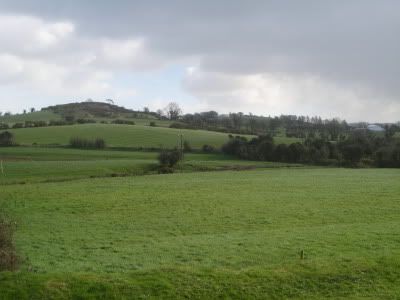


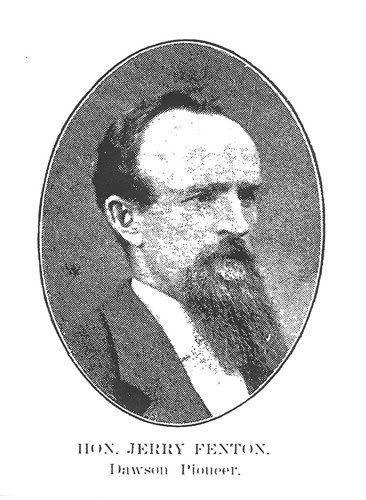
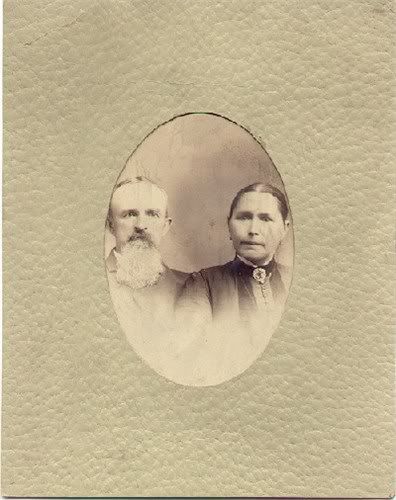
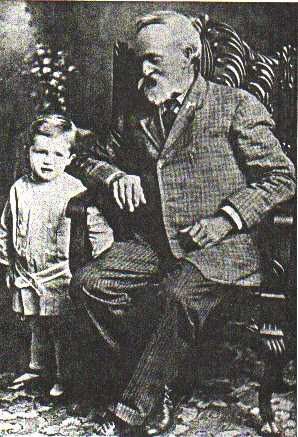
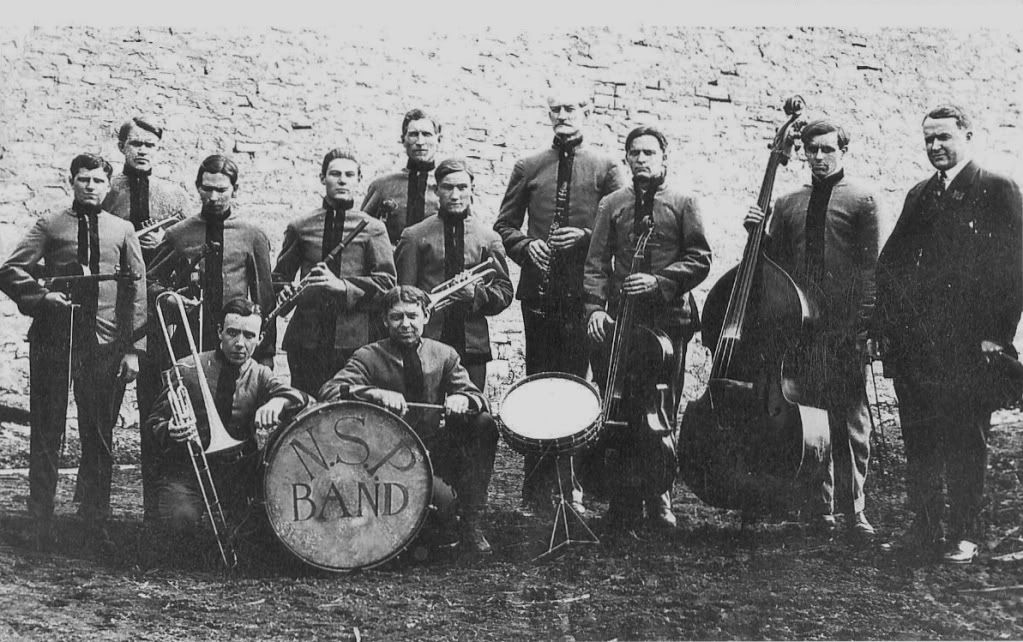
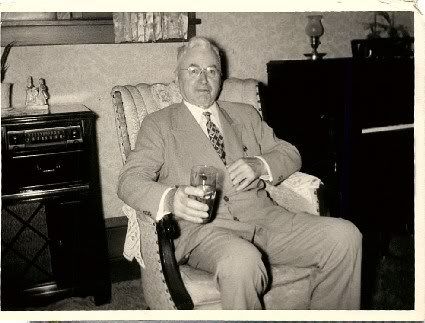
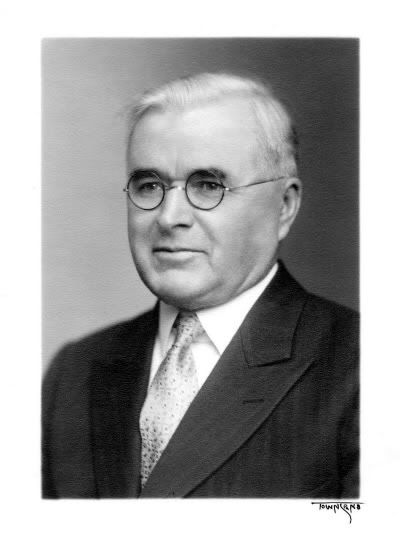
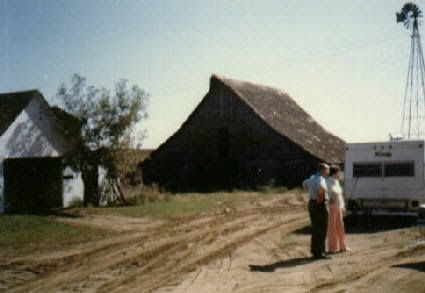
![[Dave T. on rt.]](http://i198.photobucket.com/albums/aa191/dickandrosafenton/Dave_Fenton_Haddam_Farm.jpg)
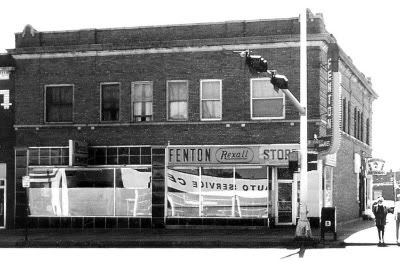
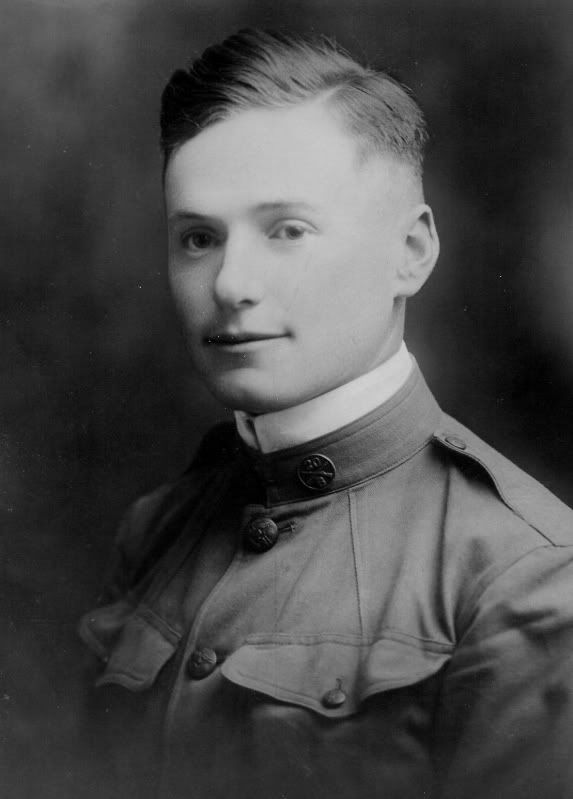


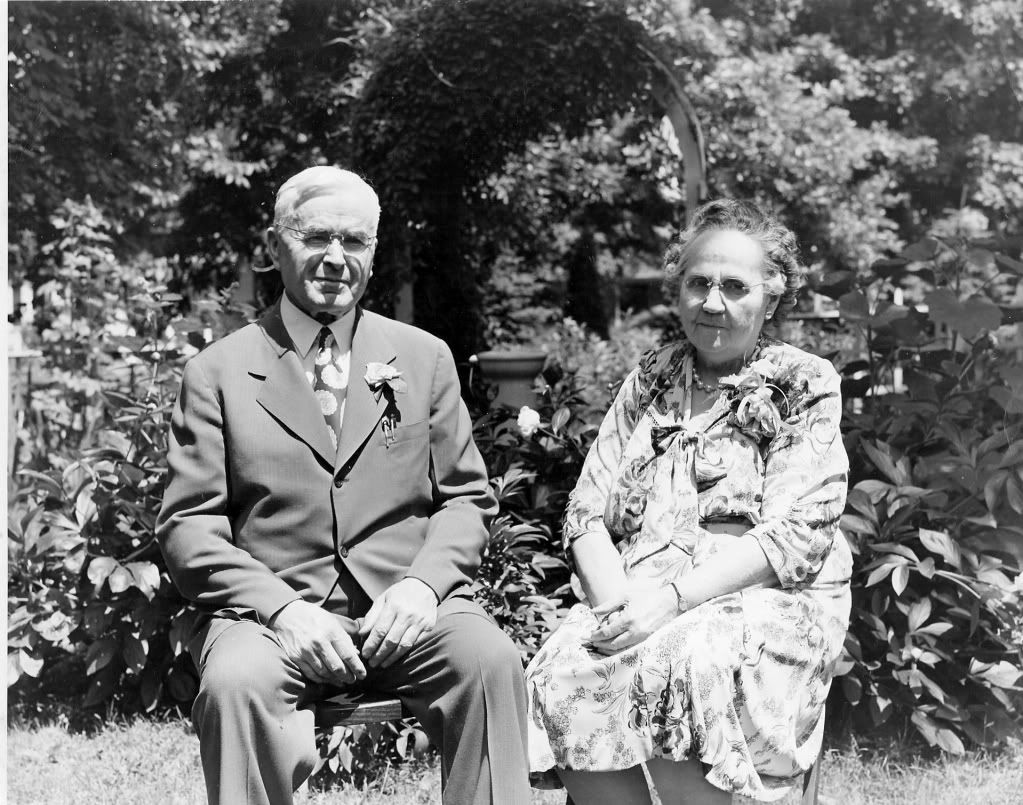
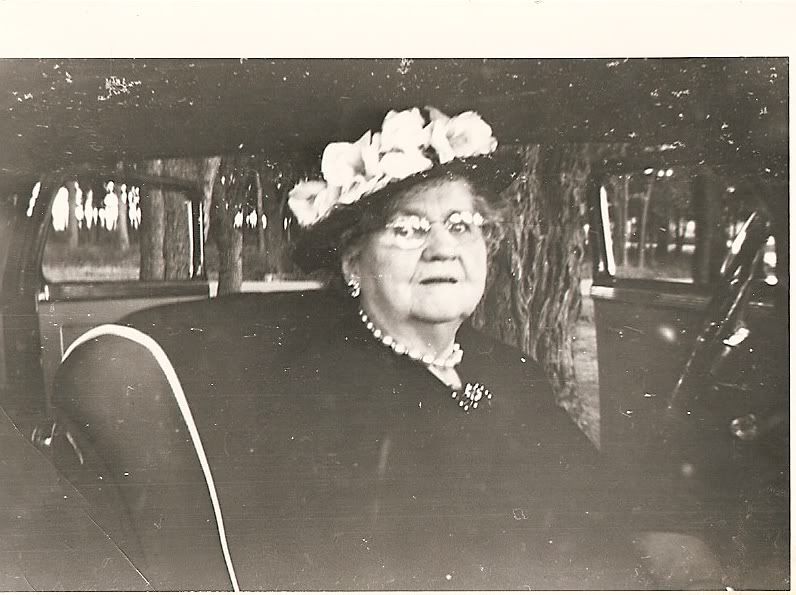

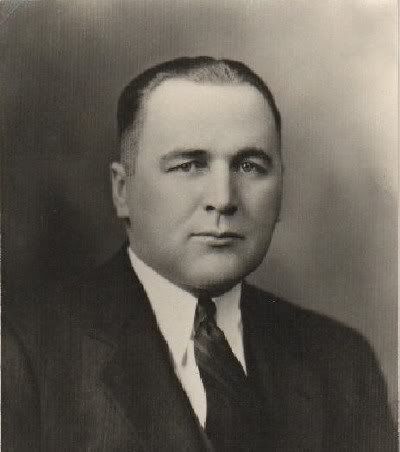
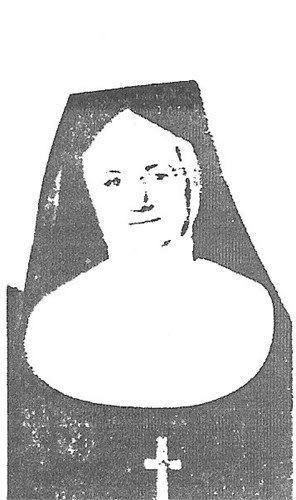

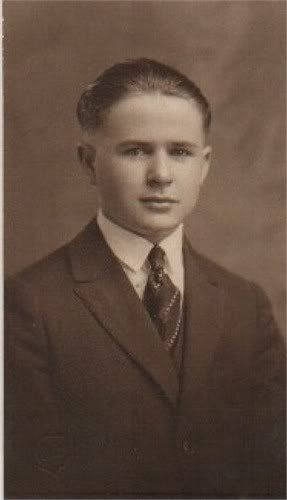
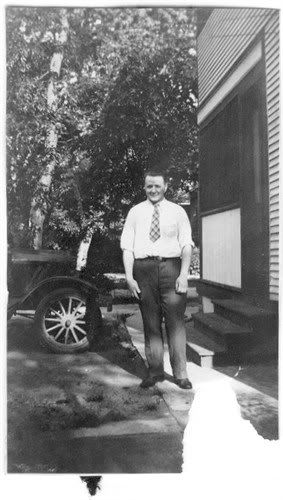
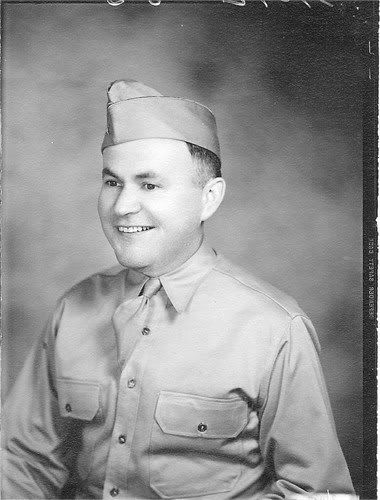
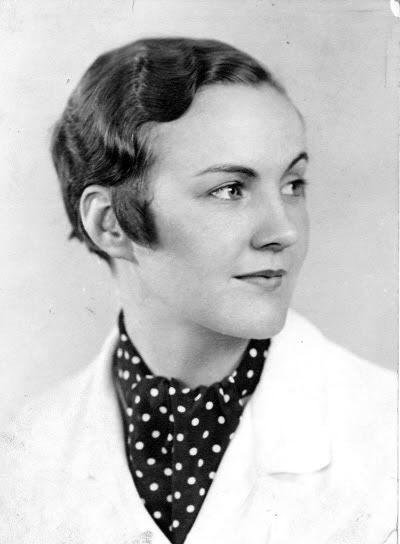
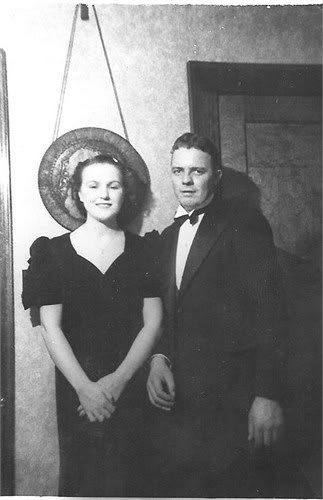
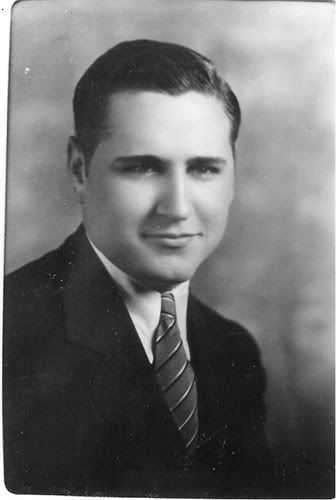
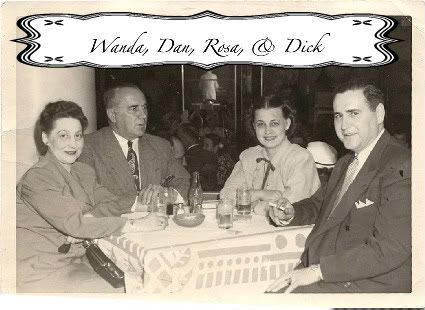

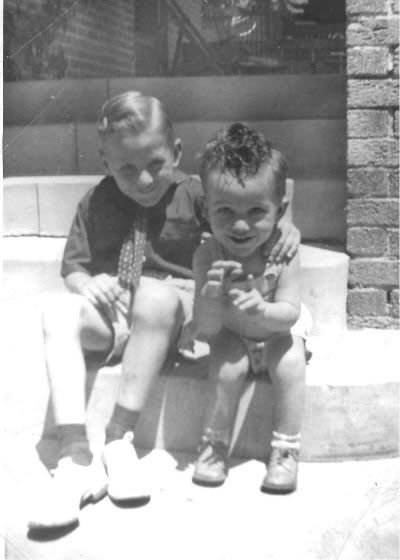
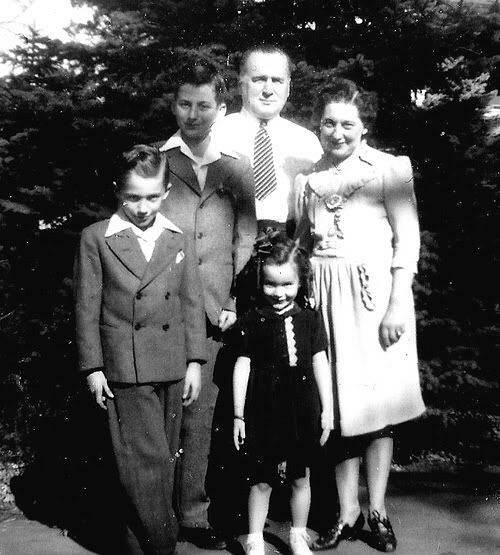
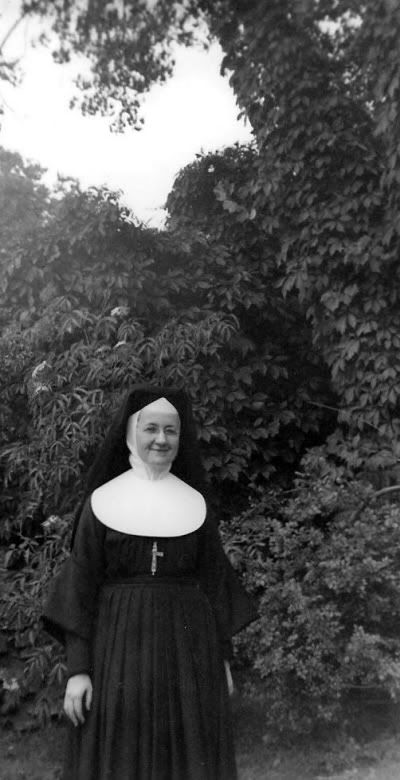
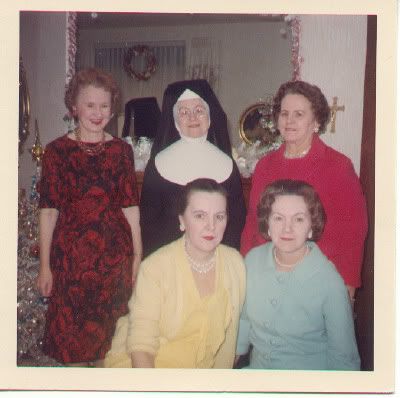
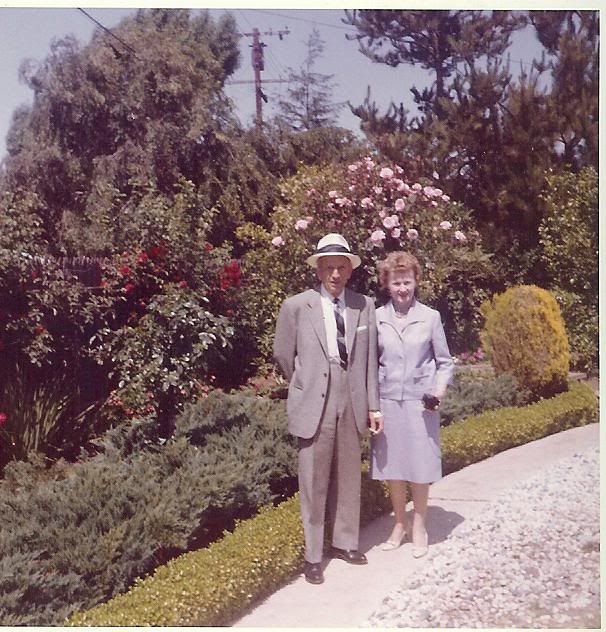
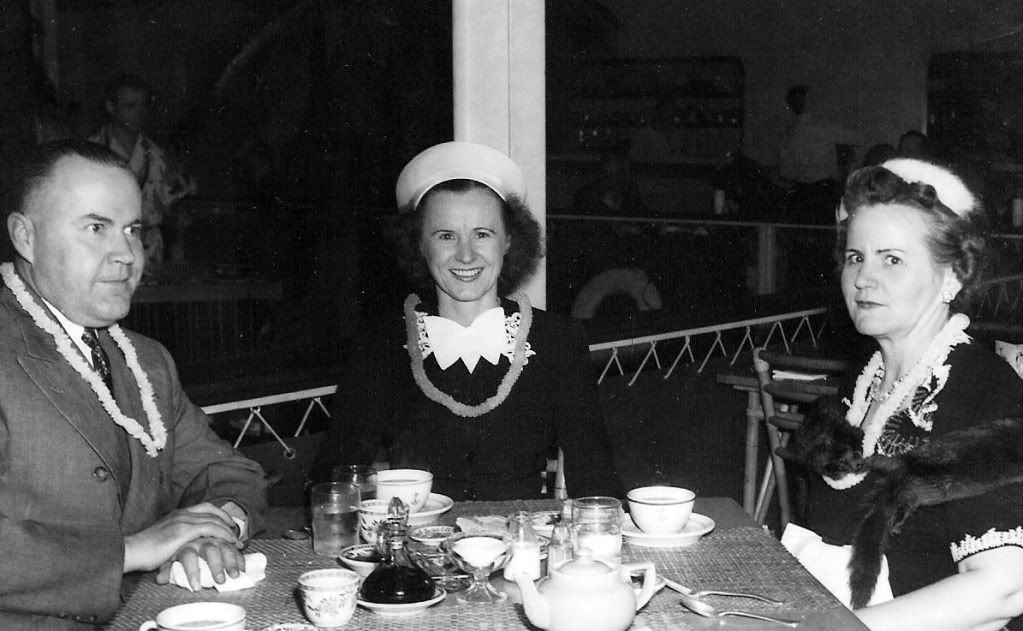

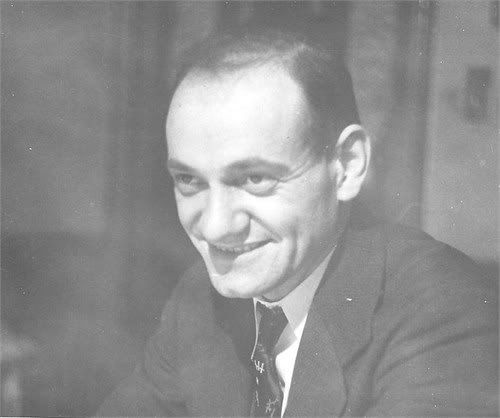
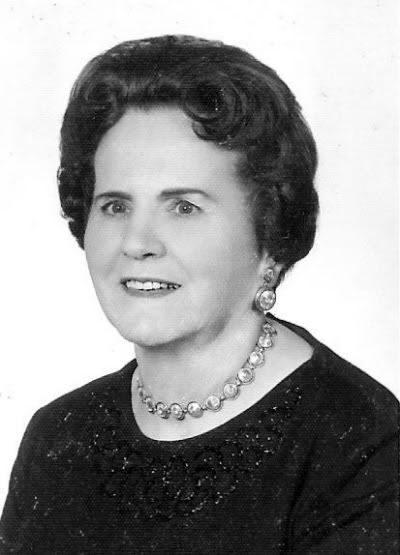
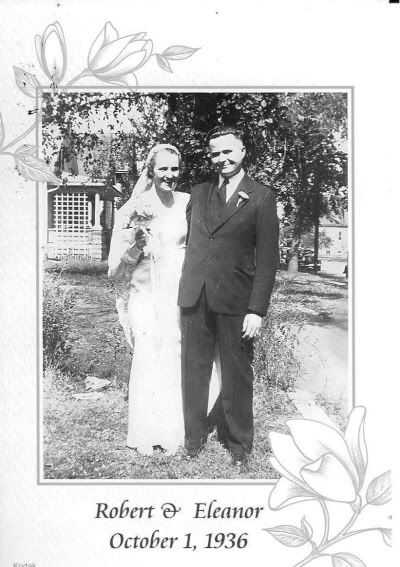
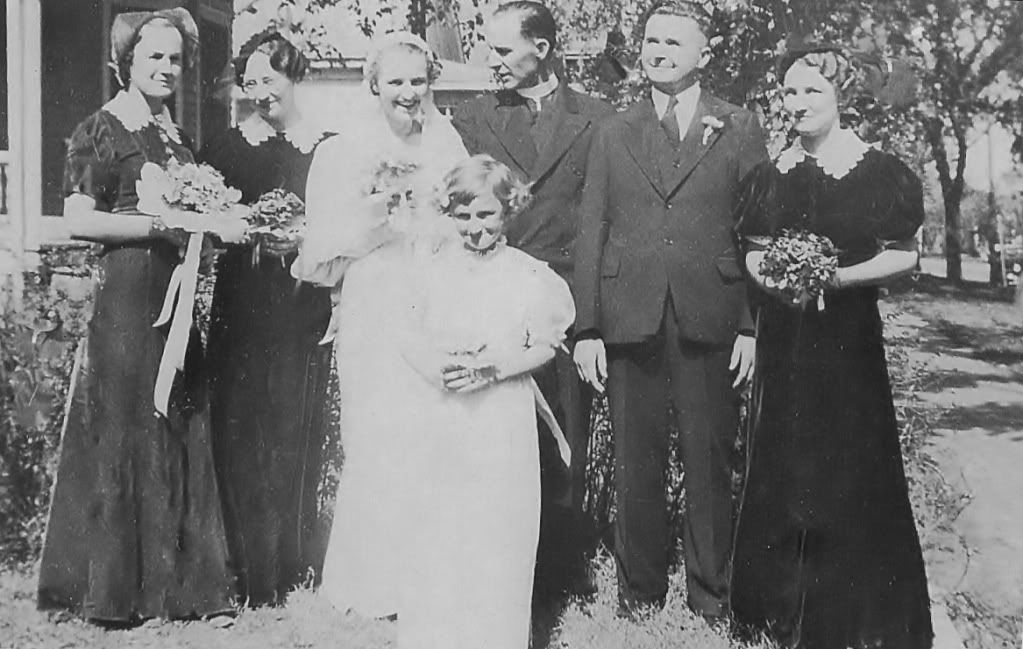
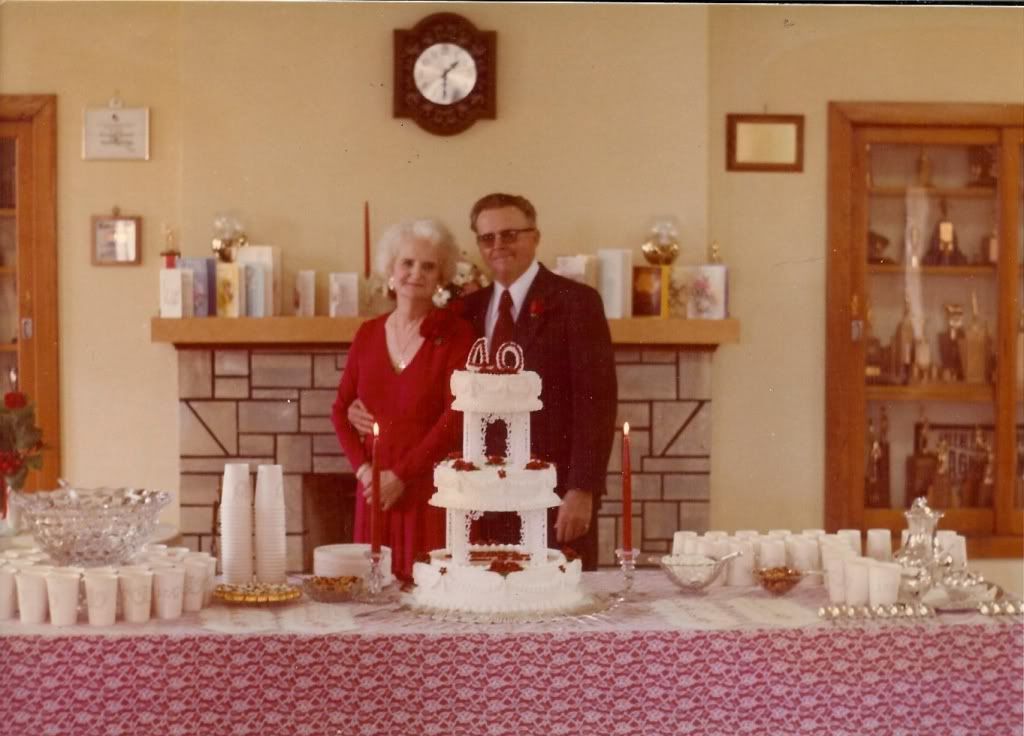
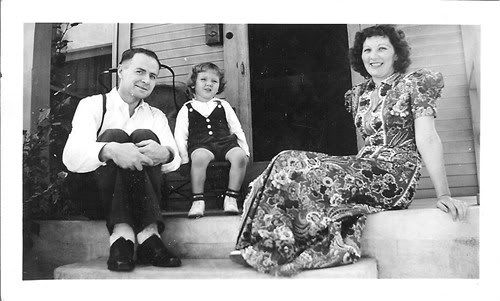
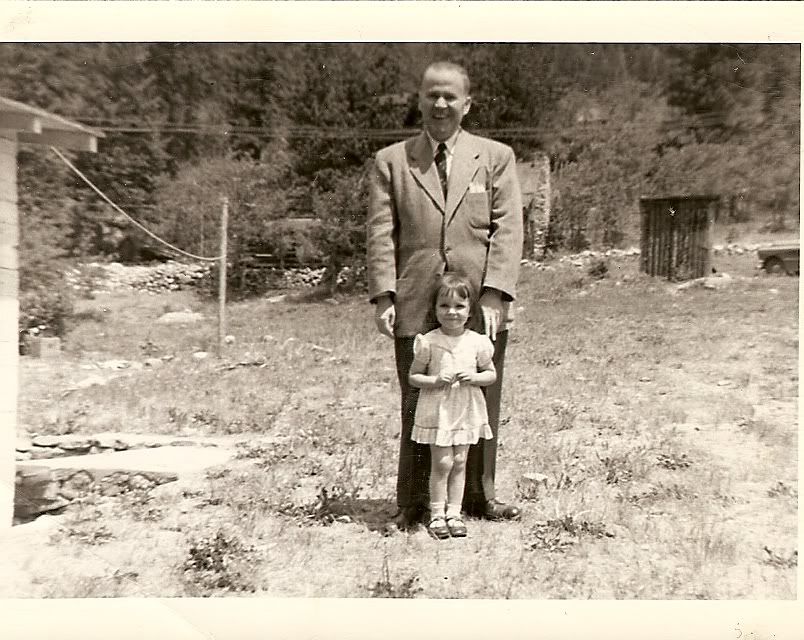
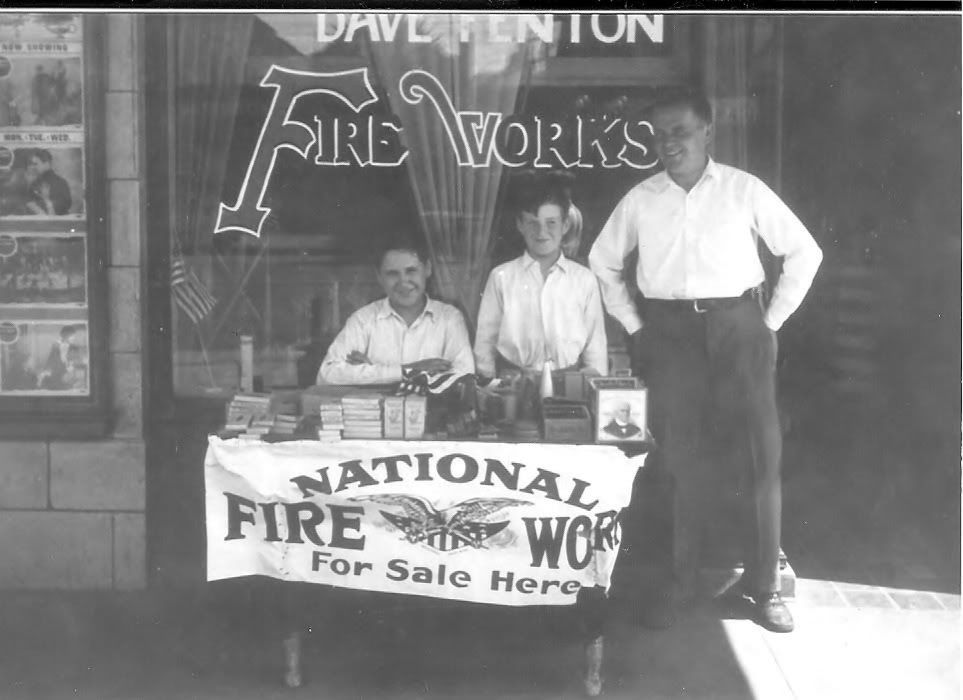
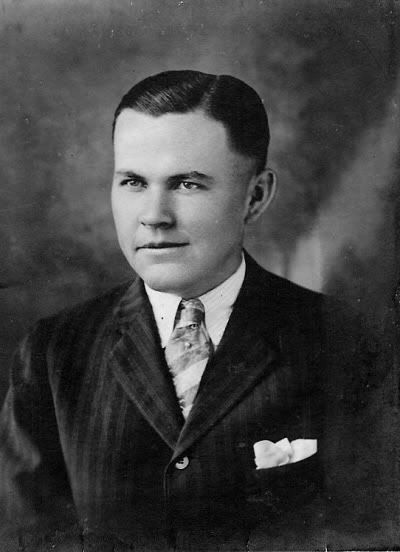
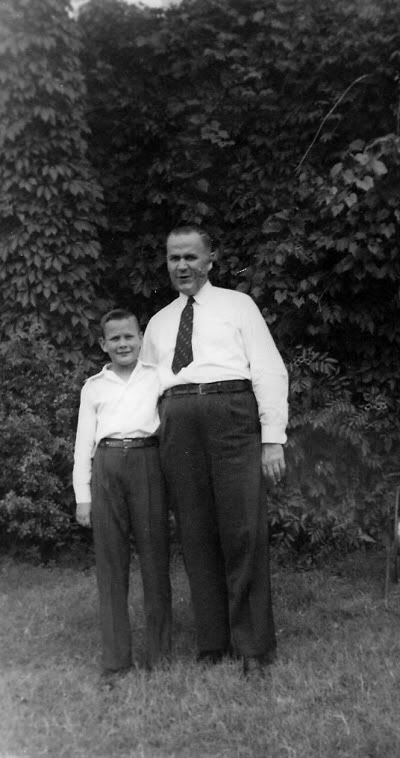
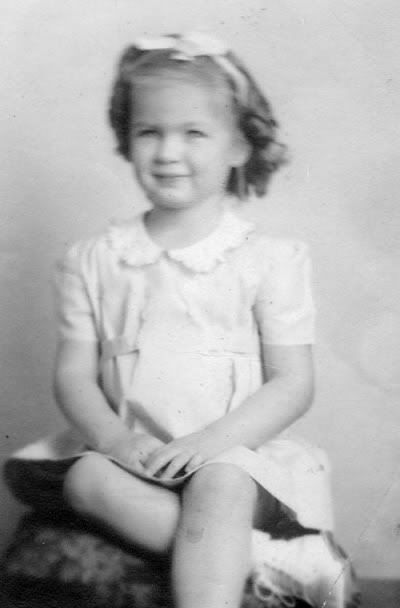
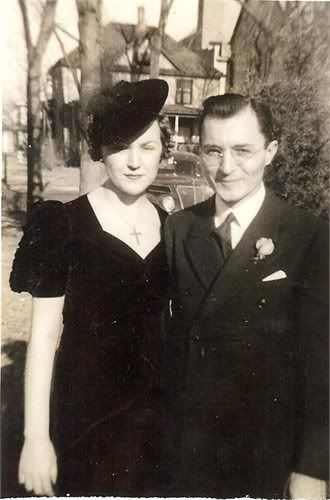
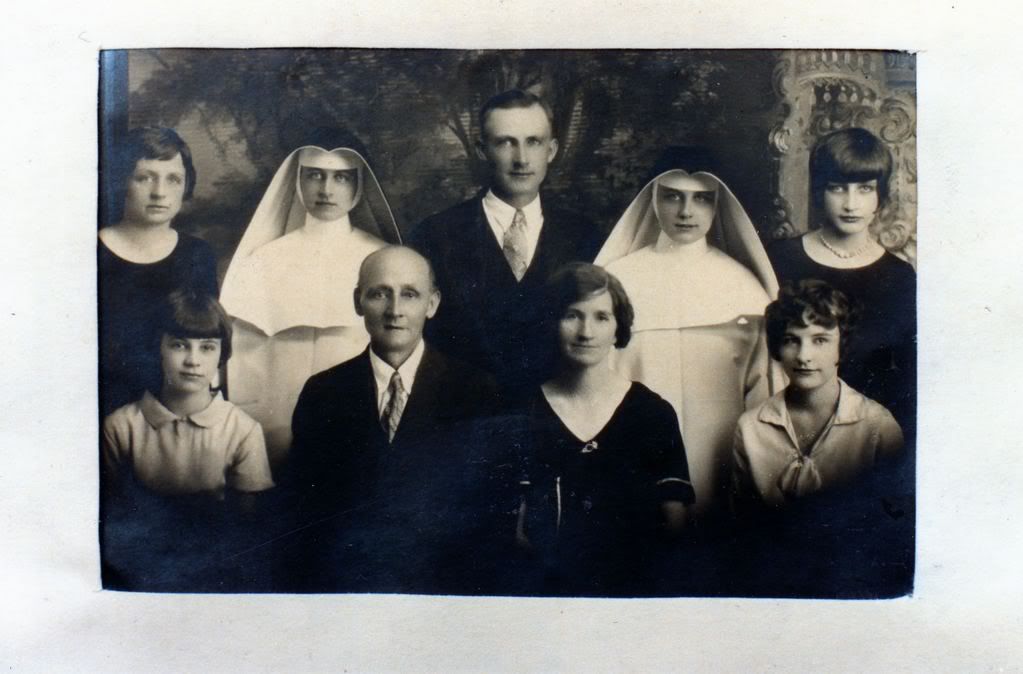
![[top left]](http://i198.photobucket.com/albums/aa191/dickandrosafenton/DadTopLeft.jpg)
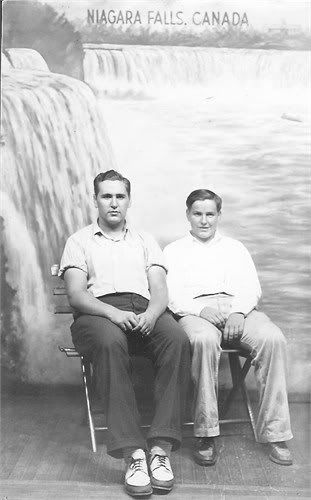
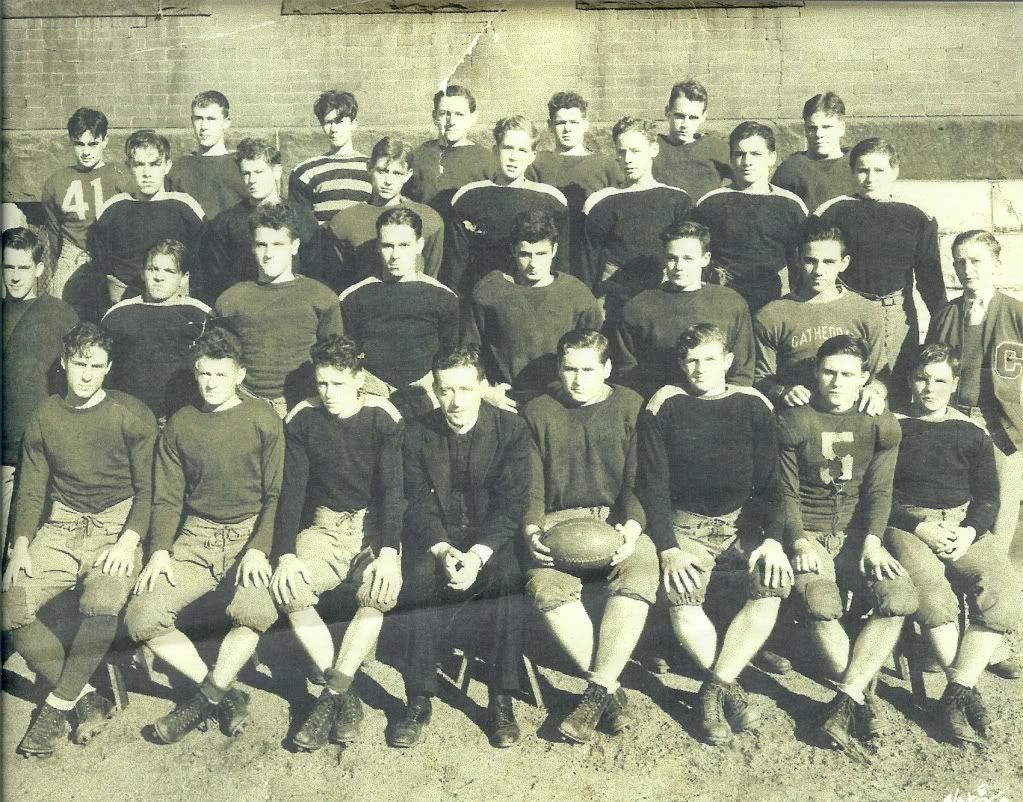
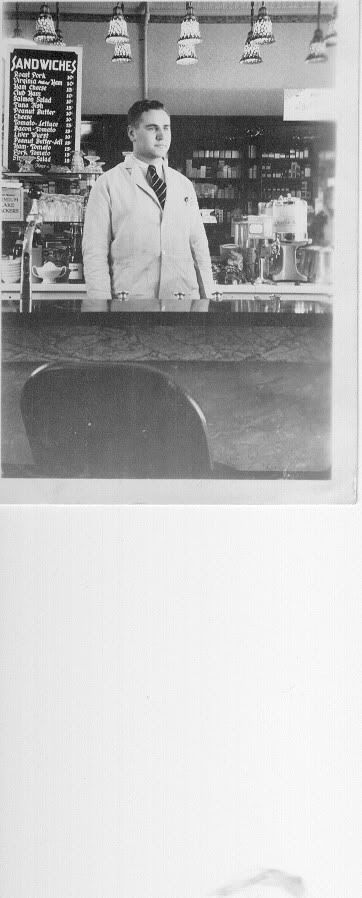

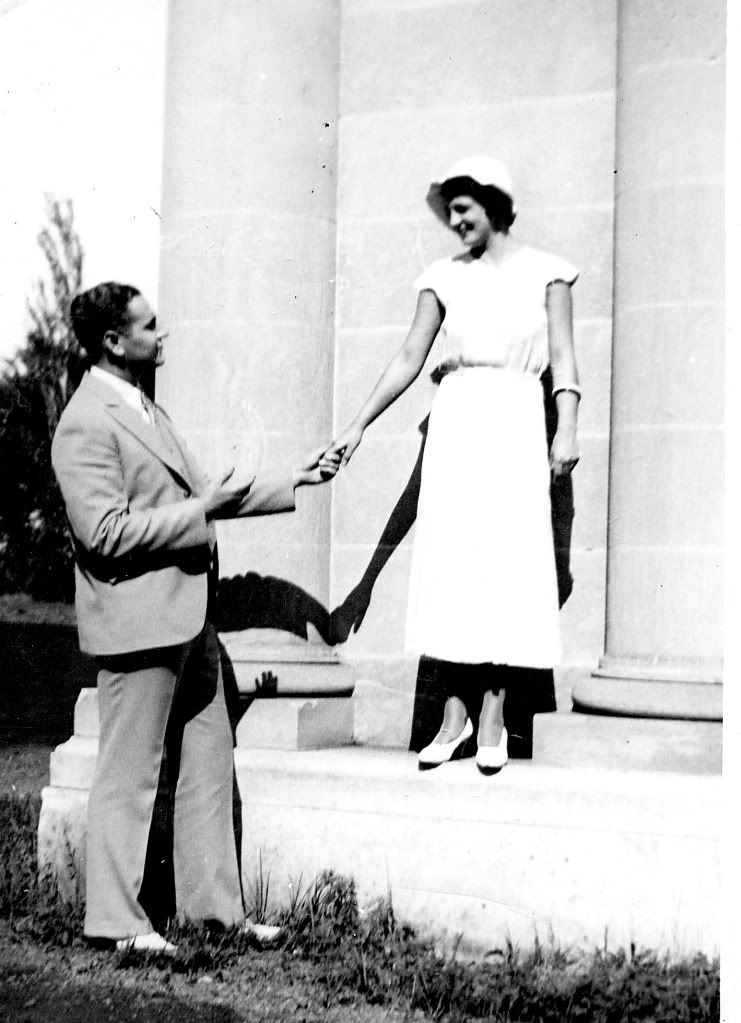
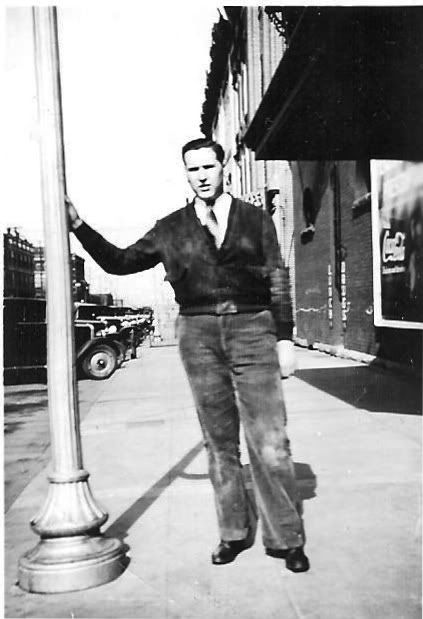


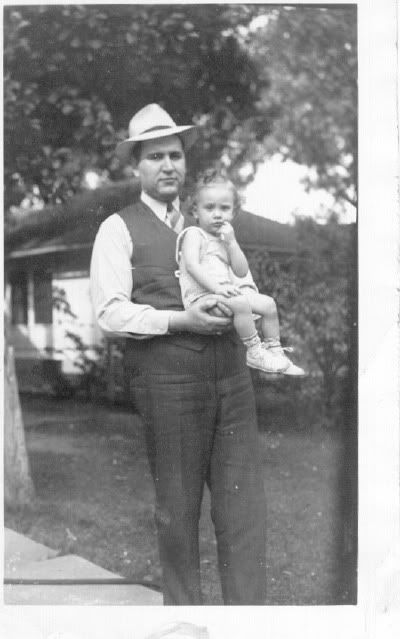

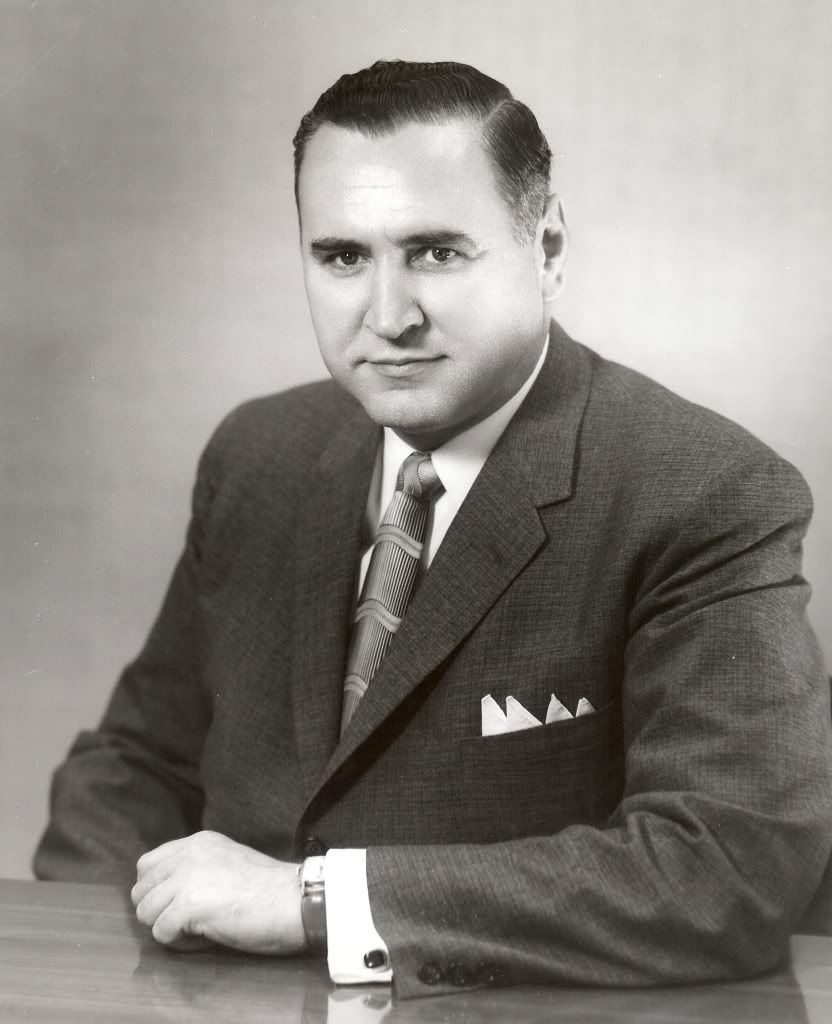
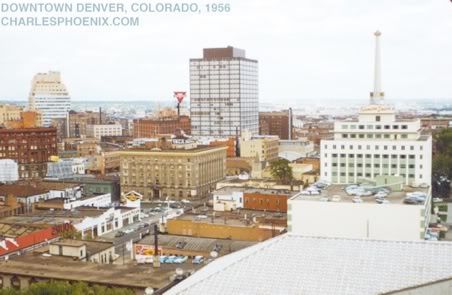
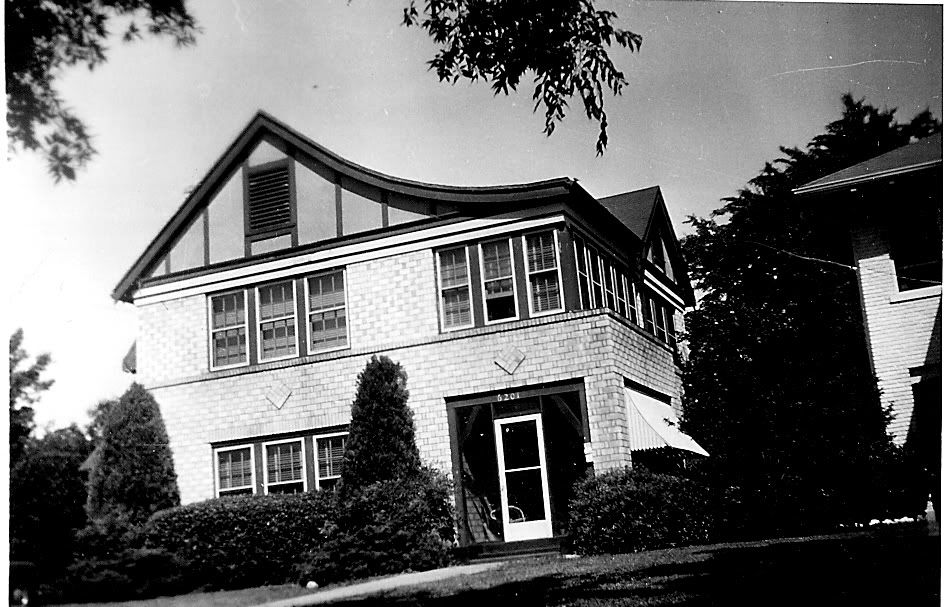
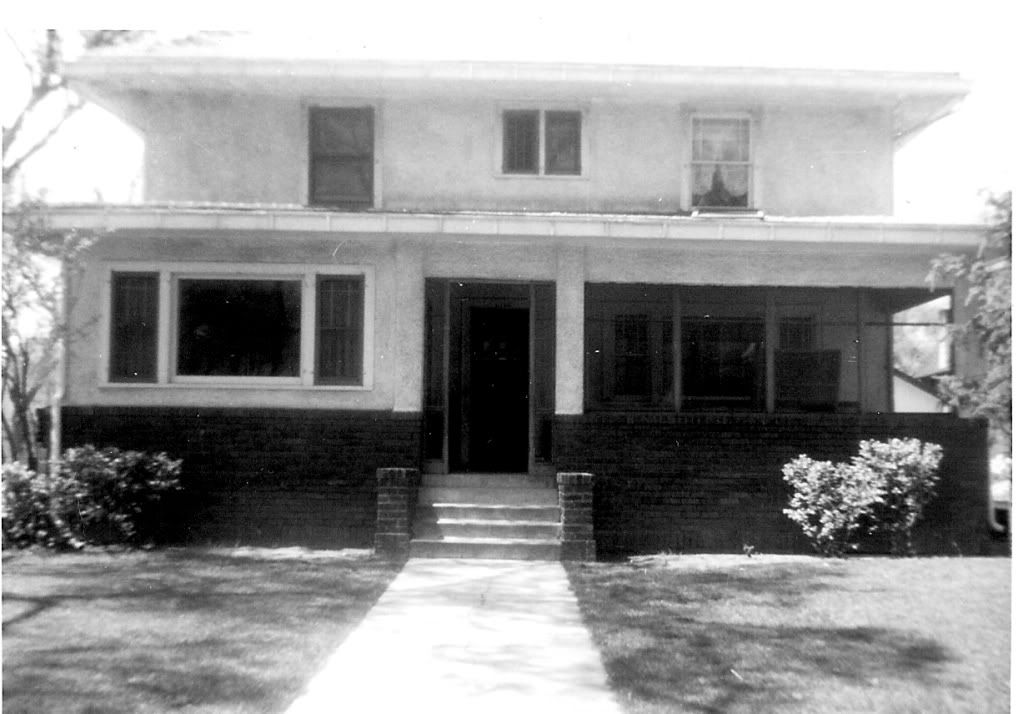
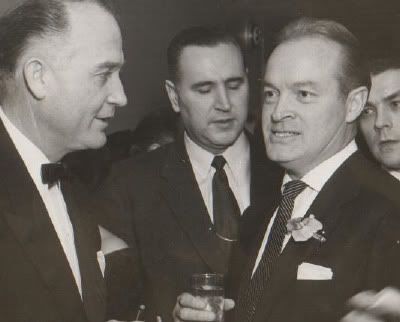
![[Dick and Rosa on their 25th Wedding Anniversary, July 1961]](http://i56.photobucket.com/albums/g172/Lbfent2/Pacesetters151.jpg)